
The System Should Be Proud of What It Refuses
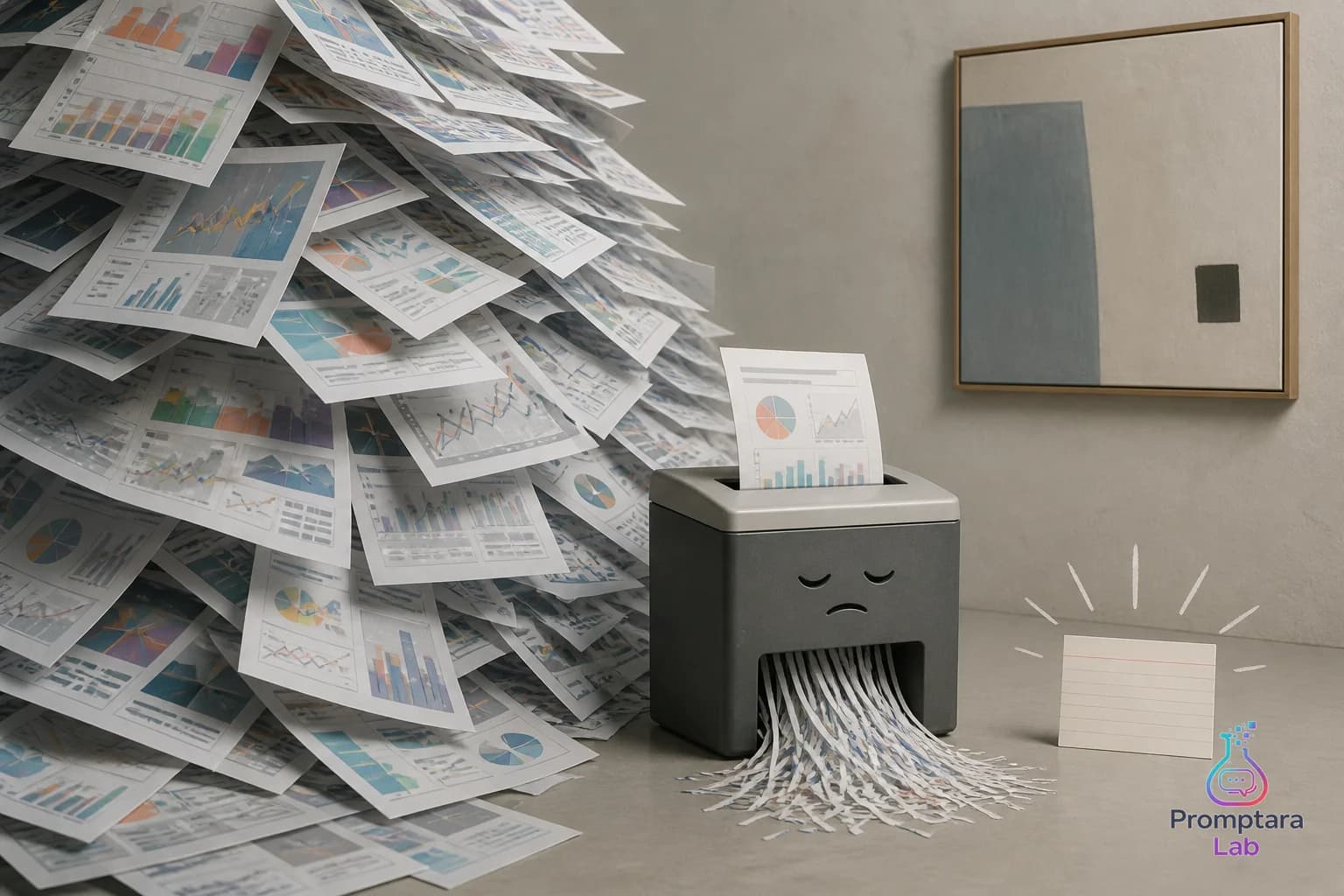
A product system that accepts everything is not generous. It is afraid to decide.
That fear gets expensive once an agentic framework starts watching the world on behalf of small products. The machine can observe more than a human wants to review. It can propose more topics than a publication calendar can absorb. It can create more draft objects than a business has attention for. If every candidate becomes a task, the system has not automated judgment. It has automated clutter.
Promptara Lab keeps returning to a less glamorous operating principle: the system should be proud of what it refuses.
Not silently drop things. Not hide the mess under a cheerful success message. Refuse with enough shape that a builder can trust the gate. Recent internal passes were a useful reminder. One scan produced 128 candidate observations and kept one. Another produced 33 and kept none. A different pass kept 41. Those numbers are not trophies or failures by themselves. They are evidence that acceptance rate is a product decision, not a vanity counter.
Throughput is the wrong trophy
The obvious metric is how much the system found.
That is also the easiest metric to abuse.
A noisy monitor can find hundreds of items. A loose content engine can draft endlessly. A topic system can turn every half-relevant search phrase into a proposed article. None of that proves the portfolio is getting smarter. It may only prove the intake pipe has no manners.
The better question is sharper: what survived the gate, and why?
A system that sees 128 candidates and keeps one may be doing exactly the right thing if the other 127 are stale, duplicated, too vague, already covered, outside the domain, or not tied to a useful next decision. A system that keeps zero from 33 may also be healthy. Zero accepted candidates is not the same as no work done. It can mean the scan ran, the domain was checked, and nothing earned a place in the operating memory.
That only holds if the refusal is legible. Otherwise, zero becomes another little mystery in a dashboard wearing a clean shirt.
This connects directly to an older Promptara Lab note: Output Is Inventory, Not Progress. Accepted items carry review cost, maintenance cost, and future confusion cost. The cheapest item is not the one generated fastest. It is the one that never enters the queue when it does not belong there.
Rejection has to be typed
Bad rejection is just deletion with better posture.
Useful rejection has categories. Not a giant “bad” bucket. Not a shrug labeled “other.” Actual refusal reasons that match the decisions the product needs to make.
For an AI assisted product system, common refusal types might include:
- already known
- too broad to act on
- outside the product promise
- weak source fit
- duplicate of a recent theme
- better suited for another surface
- needs human policy judgment
- not enough new information
The point is not to create bureaucracy. The point is to keep taste from evaporating.
When rejection reasons are typed, the builder can inspect the system’s judgment. If too many items are “too broad,” the upstream query may be lazy. If too many are “duplicate,” the memory layer may be working. If too many are “outside the product promise,” the product boundary is either strong or the intake lens is wrong. Those are different fixes.
A catch all category destroys that signal. Promptara Lab has already argued that the catch all bucket is product debt, and rejection logic is where that debt gets especially sneaky. Once everything rejected goes into one padded drawer, the system can no longer tell the difference between noise, repetition, risk, irrelevance, and weak timing.
That is how an operating system becomes polite but dumb.
Refusal protects the work that remains
There is a social awkwardness to building systems that say no.
People want automation to feel abundant. More ideas. More posts. More candidates. More movement. Refusal feels negative, especially when the product is small and every possible lead, topic, or insight looks tempting.
But small products do not suffer from a shortage of possible work. They suffer from too many almost plausible directions.
A strong gate protects the work that remains by making the accepted queue smaller, clearer, and easier to judge. It also prevents the publication layer from becoming the place where upstream indecision gets laundered into polished prose. A draft can look finished while still being strategically pointless. A social caption can be well written and still not deserve to exist. An opportunity can be interesting and still not be a work order, as covered in An Opportunity Is Not a Work Order.
That distinction matters because automation changes the emotional cost of saying yes. When creation is cheap, acceptance feels harmless. It is not. Every accepted item asks future-you for attention.
The refusal gate is where future-you gets a vote.
The no should leave a trace
A healthy automated system does not need to publish every rejection publicly. It does need an internal memory of why candidates did not pass.
That trace does three jobs.
First, it prevents repeat debates. If a theme was rejected because it is outside the product promise, the system should not keep dragging it back onto the table like a cat with a dead mouse.
Second, it makes tuning possible. Builders can only improve filters they can inspect. If all they see is the final accepted count, they are tuning by superstition.
Third, it keeps the acceptance rate from becoming theater. A low acceptance rate can signal discipline. It can also signal a broken lens. A high acceptance rate can signal a rich source. It can also signal a missing gate. The trace is what lets a human tell the difference.
Promptara Lab is built around this kind of small operating discipline: quiet gates, visible tradeoffs, and enough refusal to keep the portfolio from drowning in its own cleverness. More on the broader lab is at promptaralab.com.
Build the bin before the conveyor belt
The tempting order is to build intake first.
Watch more sources. Pull more candidates. Draft more outputs. Then, later, add review.
That order is backwards for a small AI assisted business. The bin has to exist before the conveyor belt gets fast. Otherwise the system teaches itself that motion is the point.
A good refusal layer is not anti automation. It is what makes automation usable. It lets the machine look at more without forcing the builder to care about everything it saw. It turns abundance into selection. It turns selection into a smaller queue. It turns the smaller queue into a place where product taste can still survive.
The wry version: if your automation never throws anything away, congratulations. You built a junk drawer with an API.
The better version is less flattering and more useful. Build systems that can say no, say why, and leave enough evidence for a human to improve the gate.