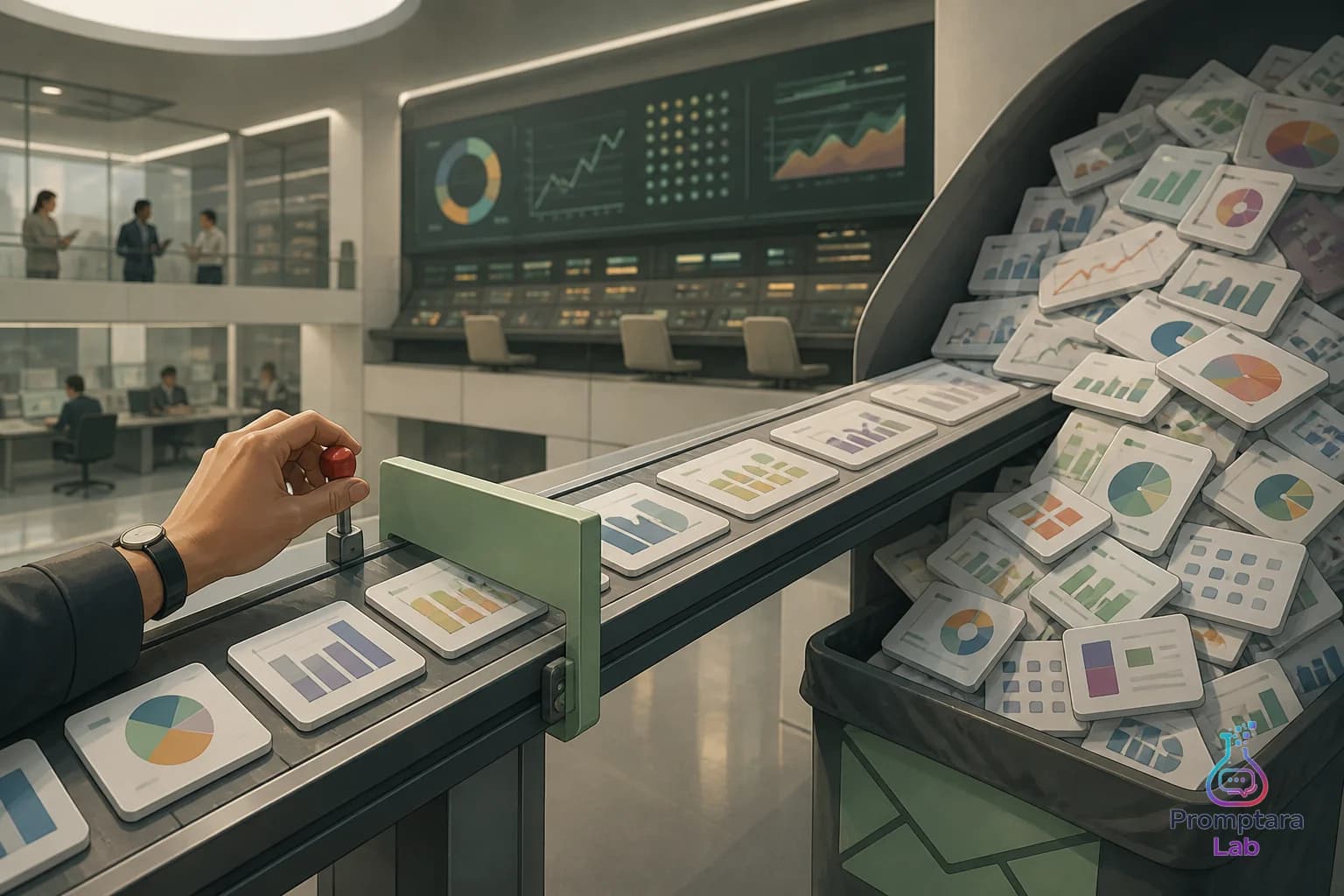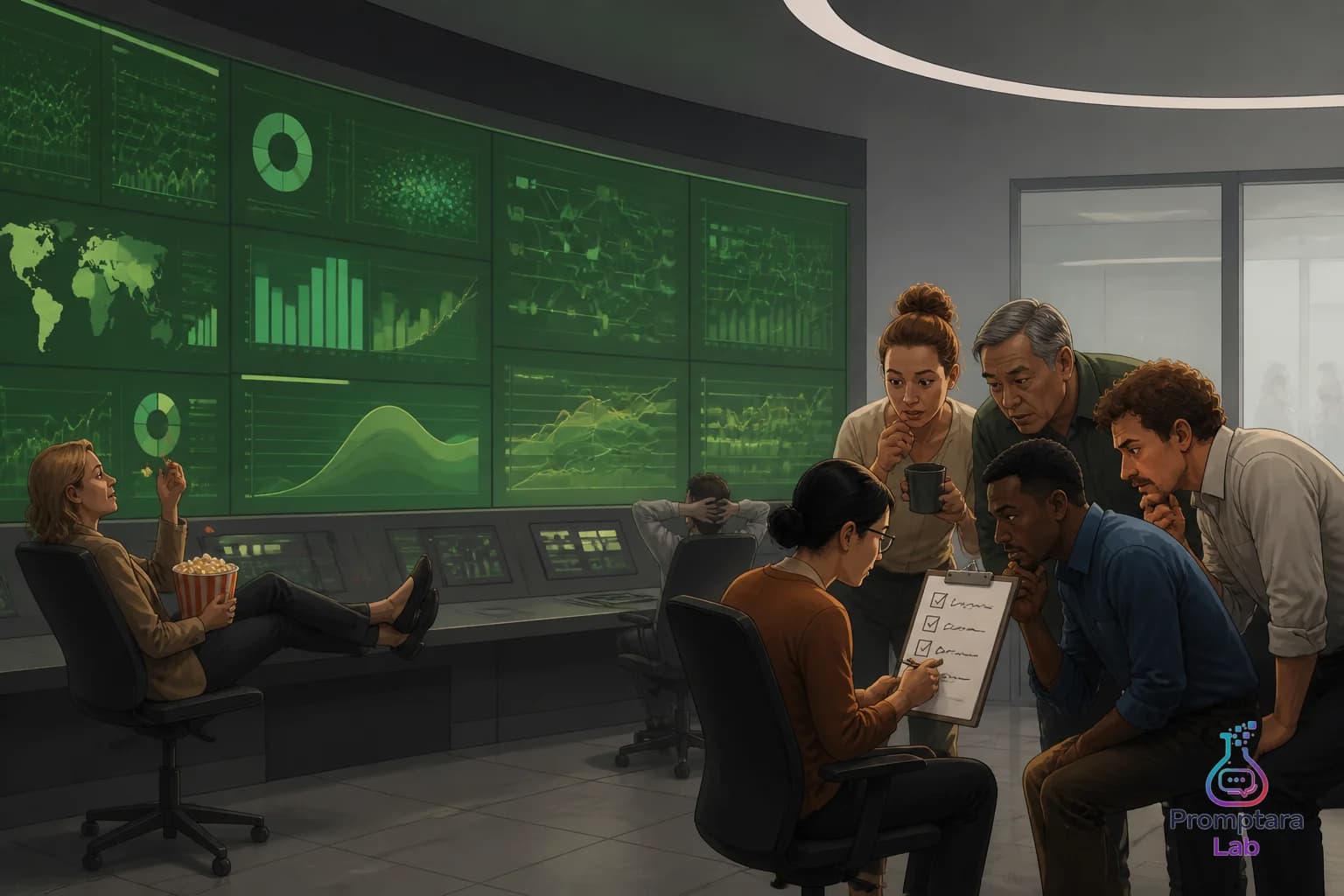
Output Is Inventory, Not Progress
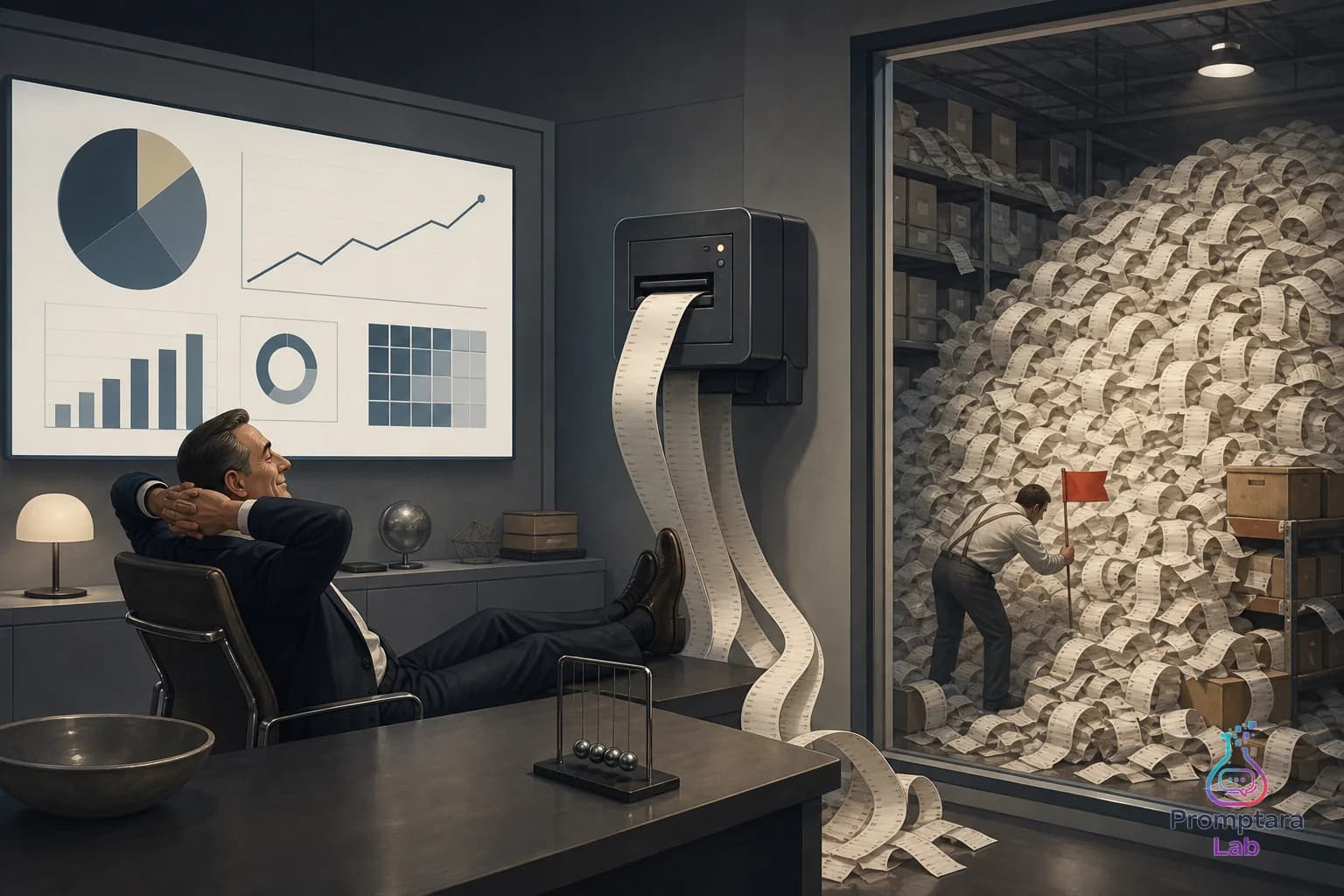
Automation makes output feel almost weightless. That is the trap.
A draft appears. A social caption appears. A signal pass finds observations. A topic system proposes opportunities. A publication engine creates draft records. A notification arrives saying the machine did what it was told to do.
Fine. Useful, even.
But none of those artifacts are free. They are inventory. They sit somewhere. They imply a decision. They can go stale. They can crowd out better material. They can make a portfolio look busy while the operator is quietly becoming a warehouse manager for machine-made obligations.
At Promptara Lab, the agentic framework under the hood is designed to create artifacts across small product surfaces. The more interesting design problem is not whether it can create them. It can. The harder question is whether each artifact has earned the right to exist after creation.
A generated thing is a liability until it has a next state
A draft is not an article. A candidate is not a task. An observation is not a decision. A social draft is not distribution.
Those distinctions sound annoying until the queue gets crowded. Then they become the difference between an operating system and a junk drawer with timestamps.
The simple mistake is treating creation as completion. The machine produced a thing, so the system feels finished. But a generated thing usually creates at least one follow up question:
- Should this be reviewed?
- Should this be rejected?
- Should it be merged with something already known?
- Should it expire?
- Should it change a product surface, an editorial plan, or nothing at all?
If the answer is not encoded somewhere, the artifact becomes ambient debt. It does not scream. It just waits.
That is why the draft queue deserves product attention, not just editorial cleanup. We have written before about why the draft queue is a product surface. The same logic applies to every other machine-created object. The queue is where automation makes promises it has not fulfilled yet.
Raw output count is a lousy victory lap
Two automation runs can both look productive while creating very different inventory problems.
One signal pass might observe 100 items and keep 7 as new observations. Another might observe 95 and keep 47. Neither number is automatically good or bad. The first could mean duplicate filtering is doing its job. The second could mean the domain is genuinely moving. Or it could mean the system is too permissive and just bought the operator a review hangover.
The useful question is not, “How much did we generate?”
The useful question is, “How much reviewable material did we add, and what decision does it support?”
That is a colder question. Good. Warm dashboards are how clutter gets a marketing budget.
Automation should separate intake from inventory. Observed is not inserted. Inserted is not accepted. Accepted is not acted on. Acted on is not proven valuable. Each step changes the promise attached to the artifact.
When those states are blurred, output count becomes theater. A system can report a large number while leaving the operator with no clear sense of what changed, what needs attention, and what can be ignored.
Opportunities need a shelf life
Opportunity candidates are especially dangerous because the word sounds flattering.
A system finds something that might be worth doing. It labels it an opportunity. The operator feels smart for having a machine that finds possibilities. Then the list grows. Then every item starts to feel faintly accusatory.
This is where small portfolios get weird. The machine is not wrong to surface options. Options are good. But an option without triage is not strategy. It is a polite interruption.
An opportunity candidate should have a shelf life. It should either become a planned action, merge into an existing theme, wait with a reason, or die cleanly. Otherwise the portfolio becomes a museum of almost decisions.
We have argued this directly in An Opportunity Is Not a Work Order. The same principle applies here: output should not be allowed to promote itself. The fact that an artifact exists does not mean it deserves work.
Drafts are inventory with public risk
Content drafts carry a different kind of cost. They are not just internal clutter. They can become public clutter if the handoff is lazy.
A publication engine can create social drafts with tidy statuses. That is useful. It gives the operator a checkpoint before something becomes visible. But a draft status is only useful if everyone knows what it means.
Draft means pending judgment. It does not mean approved. It does not mean published. It does not mean effective. It means the system prepared a thing for review.
That sounds obvious. It is also where many automation systems quietly cheat. They optimize for making more draft-shaped objects, then call the pile a content operation.
The better pattern is to treat drafts like stock in a small shop. Too little inventory and the shelves are empty. Too much inventory and the shop becomes storage. The right amount depends on review capacity, freshness, and the cost of being wrong in public.
Carrying cost belongs in the operating model
The cleanest way to stop automation inventory from becoming debt is to price the carrying cost up front.
Not with elaborate governance theater. Just with a few blunt rules:
- Every artifact needs a current state.
- Every reviewable artifact needs a reason it exists.
- Every stale artifact needs an expiration path.
- Every metric gap should stay visible instead of being rounded into confidence.
- Every queue should be small enough that a human can still understand what is in it.
That fourth point matters more than it sounds. Missing measurement should not be treated as zero just because zero is easier to chart. We covered that distinction in A Missing Measurement Is Not Zero. Inventory discipline has the same shape. Unknown is not empty. Drafted is not done. Candidate is not approved.
The point is not to slow everything down for the pleasure of process. The point is to stop the system from laundering unfinished work into a feeling of progress.
The Promptara rule: fewer artifacts, clearer promises
Promptara Lab exists to build and study AI powered micro businesses without pretending the machine has repealed operations. The public version is at Promptara Lab, but the principle is portable: an automated portfolio should prefer fewer artifacts with clearer promises over more artifacts with vague status.
Output is not progress. Output is inventory.
Some inventory is valuable. Some is necessary. Some is just confetti wearing a timestamp.
The operator’s job is not to admire the confetti. It is to decide what earns shelf space, what gets used, and what gets swept up before it becomes the business.