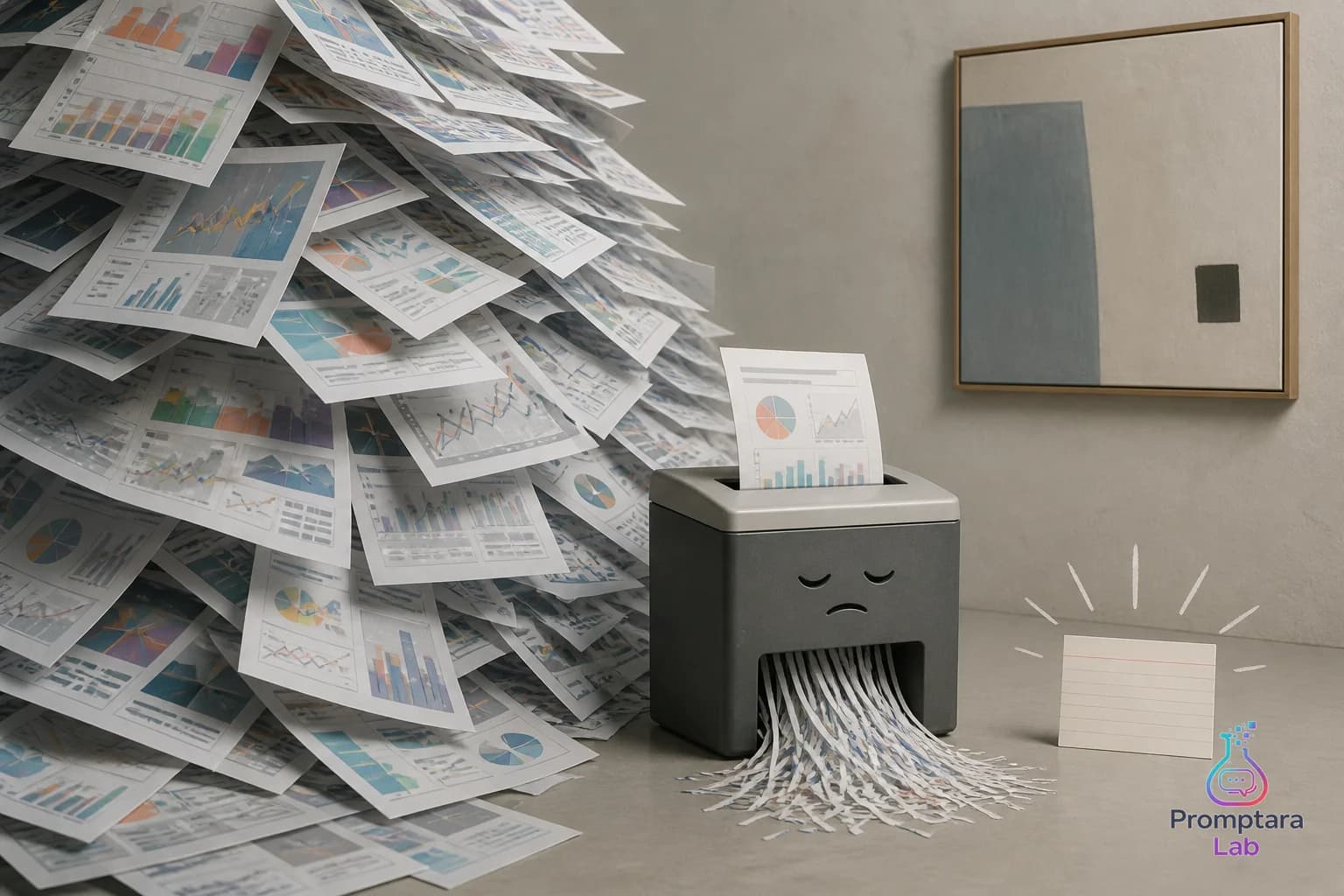
One Threshold Is a Lie

A single threshold is a very satisfying lie.
It makes an automated system feel governed. Set the number. Tune the filter. Let the machine decide what passes. The dashboard gets cleaner. The operator gets fewer interruptions. Everyone briefly enjoys the fiction that judgment has been compressed into one tidy setting.
Then the system touches more than one product surface.
A search suggestion is not a forum complaint. A draft candidate is not a customer action. A content opportunity is not a bug report. A traffic visit with no action is not the same kind of evidence as a submitted form. Treating all of those with one threshold is not discipline. It is a blender with a settings page.
At Promptara Lab, the agentic framework under the hood watches several small product surfaces with different input types and different costs of being wrong. That is enough to make one principle hard to ignore: thresholds are product decisions, not technical constants.
The same number does not mean the same thing
Suppose one surface inspects 125 outside observations and accepts none into its durable signal store. Another inspects 87 and accepts 41. A lazy dashboard would rank the second as healthier because more things moved forward.
Maybe. Maybe not.
The first surface may be behaving exactly right if the incoming material was noisy, repetitive, off topic, or too weak to justify future review. The second may be doing useful capture, or it may be hoarding slightly plausible material because the gate is too soft. The count alone does not settle the question.
This is where builders get sloppy. They want a universal conversion rate from observed to accepted. They want the product system to say, below this percentage is bad, above this percentage is good. Nice try. Different surfaces deserve different tolerance.
A low acceptance rate can mean the filter is working. A high acceptance rate can mean the filter has surrendered. The only way to know is to attach the threshold to the job the surface is supposed to do.
This is adjacent to the point in Seeing Is Not Selecting: observation is not judgment. But there is a second layer after that. Selection is not one generic motion either. Selection for storage, selection for review, selection for publication, and selection for product work all need different gates.
Thresholds need a review budget
Every accepted item creates a future obligation. Someone, or some later process, has to inspect it, compare it, reject it, route it, draft from it, or ignore it with a straight face.
That means a threshold is not only a quality setting. It is a labor contract.
If an automation run can create dozens of opportunity candidates from around a hundred observations, the filter is not merely deciding what is interesting. It is deciding how much review inventory the system is willing to carry. If the same run also has a usage meter attached, the cost is not just tokens or requests. The cost is the attention required to keep the output from becoming decorative clutter.
Small systems can miss this because the direct bill looks tolerable. A daily usage line with a few dozen requests and a modest cost can feel harmless. The trap is that cheap generation makes weak acceptance feel less expensive than it is. The bill arrives later as sorting, second guessing, stale queues, and vague confidence.
A better threshold asks three questions before it lets an item through:
- What will this item be used for if accepted?
- Who or what reviews it next?
- What gets worse if we accept too many like it?
That third question is impolite and useful. Too many weak content candidates make the editorial system bland. Too many weak product opportunities make prioritization theatrical. Too many weak alerts make notifications invisible. Too many weak traffic interpretations turn analytics into folklore.
Promptara Lab keeps the public side of this work at promptaralab.com, but the operating habit is less glamorous: do not let the machine create obligations without naming the budget.
Calibrate by surface, not by ego
The wrong reason to tighten a threshold is vanity. Nobody wants a system that accepts zero items because zero looks strict. That is not taste. That is fear wearing a lab coat.
The wrong reason to loosen a threshold is momentum. Nobody needs a system that accepts everything because the daily report looks busier. That is not growth. That is a conveyor belt pointed at a closet.
Calibration has to come from the surface.
A product with sparse, high intent inputs may need a softer early gate because each signal is rare enough to deserve inspection. A noisy discovery surface may need a brutal first pass because the outside world is extremely generous with almost useful garbage. A publication engine may need separate thresholds for idea quality, brand fit, source confidence, and visual readiness. A traffic report may need to separate visits, actions, missing measurements, and same day conversion signals instead of pretending they live in one funnel-shaped fairy tale.
When traffic appears without actions, the threshold question is not, “Was there demand?” It is, “What level of evidence would allow us to change the page, offer, channel, or measurement?” If the strongest traffic to action signal is none, the system should not improvise optimism. It should keep the branch open and avoid pretending absence is proof.
That is also why refusal should be visible. A system that rejects an item should keep enough shape around the rejection to make future tuning possible. Not every rejection needs a diary entry. But the categories matter: duplicate, off domain, weak intent, wrong source, stale, unsafe, already covered, no action path.
That idea sits beside The System Should Be Proud of What It Refuses. Refusal is not cleanup. It is how the system shows its taste.
The calibration record is the product feature
A useful automated system should be able to explain its gates without exposing private machinery.
Not the infrastructure. Not the scripts. Not the vendor wiring. Just the product contract:
- What did this surface inspect?
- What did it accept?
- What did it turn into candidates?
- What did it refuse?
- Which next queue pays the cost?
- When should the threshold be changed?
That last line is the one most systems skip. Thresholds drift. Sources change. A useful search pattern becomes saturated. A topic gets overused. A social channel starts rewarding different phrasing. A product page gets traffic but no actions. A once sensible gate becomes either too tight or too gullible.
The answer is not constant fiddling. The answer is a calibration record good enough that a builder can tell whether the threshold still matches the surface.
One global threshold is neat. It is also usually fake.
The better system has multiple gates, each tied to a cost, a next action, and a reason for existing. Less elegant on the diagram. Much less likely to fill the operation with polished nonsense.