Automation Needs a Brake Pedal, Not Just a Throttle
Quick answer
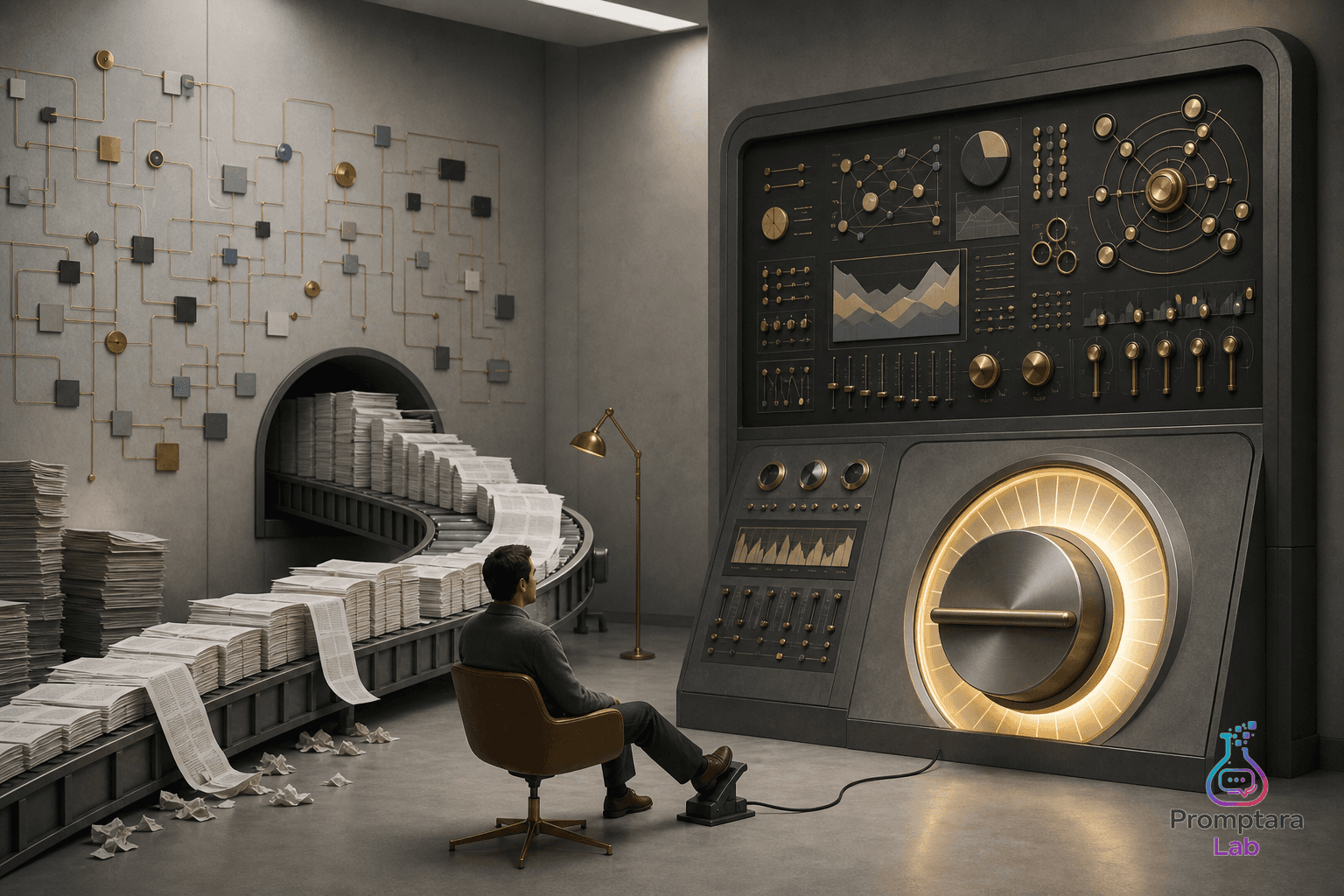
AI-assisted product systems need brake pedals because a completed automated run is not always a useful addition, publication, or decision. Promptara Lab uses the phrase "brake pedal" for explicit states that let a system pause, hold, draft, decline, or report "not enough evidence" before activity turns into inflated claims.
Source context: this is a Promptara Lab operating-principles note, first published July 20, 2026 and last updated July 20, 2026.
Most automation is sold as a throttle.
More inputs. More drafts. More posts. More surfaces touched before breakfast. The sales pitch is basically a leaf blower with a login screen.
That is only half the machine.
The part builders underdesign is the brake.
Promptara Lab keeps returning to this because an AI assisted portfolio does not fail only by stopping. It also fails by continuing too confidently. A system can complete a run, produce a tidy artifact, send a notification, and still be wrong to add the result to the permanent pile. Worse, it can be technically successful while quietly teaching the operator to trust activity as judgment.
That is how you get a content machine that never says, “Nothing new here.”
That sentence is not laziness. It is hygiene.
Completion should not mean addition
A healthy automated system needs room for a completed run that does not add anything.
That sounds obvious until the dashboard turns green and someone asks, “So what did it produce?” The implied answer is usually a new item, a new page, a new post, a new lead, a new something. Empty hands feel suspicious.
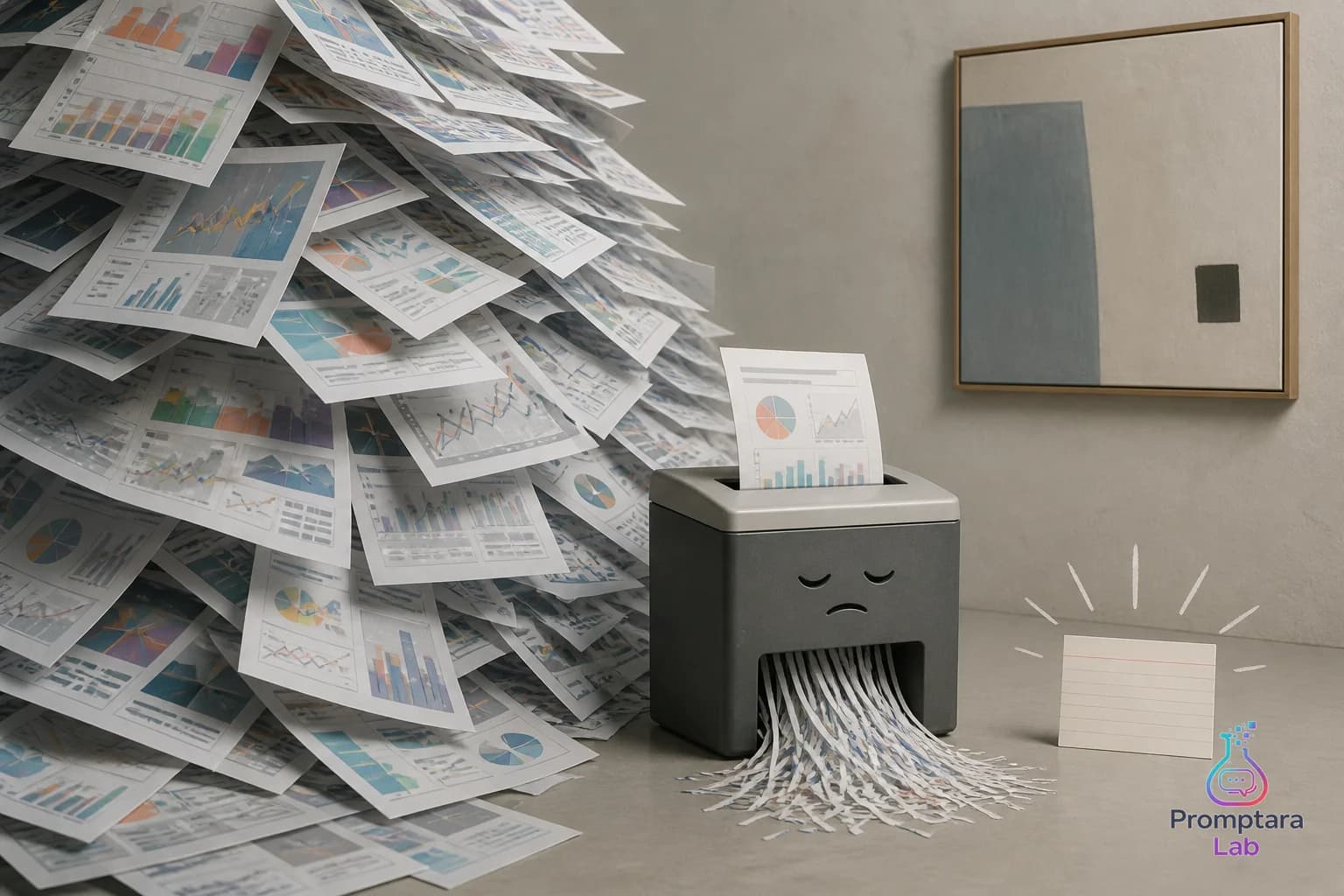
But a signal pass can look at a decent amount of material and correctly decide the source of truth does not need more weight. In the internal evidence for this note, one domain pass reviewed 92 observations and inserted 0 new observations while still identifying 15 opportunities. Another reviewed 78 observations, inserted 0 new observations, and identified 16 opportunities.
That is not a broken run. That is a run with restraint.
What people get wrong is treating every stage as a production stage. Observation is not the same as ingestion. Ingestion is not the same as publication. Publication is not the same as proof. If those boundaries collapse, the system starts rewarding volume over discrimination.
A completed run should be allowed to say:
- I looked.
- I found no new durable evidence.
- I preserved the record instead of polluting it.
- I still left useful candidates for later judgment.
That is a much better outcome than inventing novelty to satisfy a progress-shaped expectation.
The brake has more than one pedal
“Add a human review step” is the lazy version of this idea. Sometimes it is right. Often it is just a vague guilt tax bolted onto an otherwise overeager system.
A real brake pedal has to be designed at each decision point.
There is an ingestion brake: should this observation become part of the durable memory, or is it just noise wearing a convincing jacket?
There is a topic brake: should this idea be used now, or is it too close to something already covered?
There is a publication brake: should this be sent, scheduled, drafted, or held?
There is an interpretation brake: should this number change a decision, or is the sample too thin to carry that much meaning?
Those brakes are not bureaucracy. They are how automation avoids becoming a very fast intern with admin permissions.
The publication brake is especially useful. Some surfaces are fine for direct distribution once the payload is clean. Others are better treated as draft surfaces, where the system can prepare the caption, attach media, and stop before pretending final approval happened. Draft status is not a lesser outcome. It is a controlled boundary.
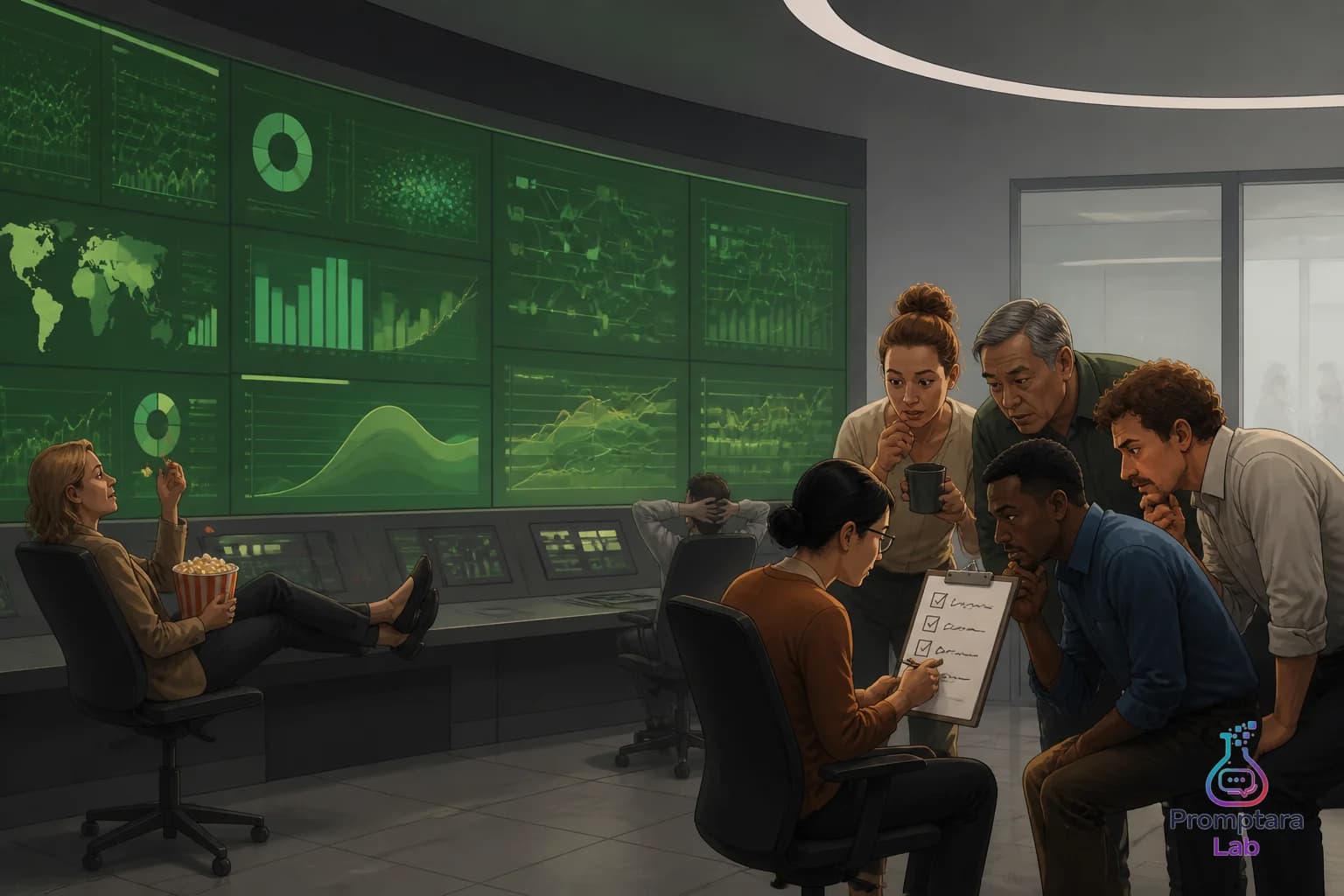
The same idea shows up in telemetry. A green check is evidence that something executed. It is not a verdict on whether the thing deserved to exist. We wrote about that distinction in Green Checks Are Receipts, Not Verdicts, and the point keeps earning its keep.
Sparse action is not a humiliation ritual
The brake pedal also applies after distribution.
Small product portfolios often have awkward telemetry. Some properties get visitors and no recorded action. One product might show a small action count from a small visitor count. Another might show nothing useful on a given day. That is not a cue to write a heroic narrative around the emptiness.
It is also not a cue to round missing or sparse evidence into failure.
Traffic without actions is a product signal, but it is a narrow one. It might point at weak intent, weak affordance, a mismatch between content and tool, or simply not enough data. The operator’s job is to keep those options open until the evidence earns more certainty.
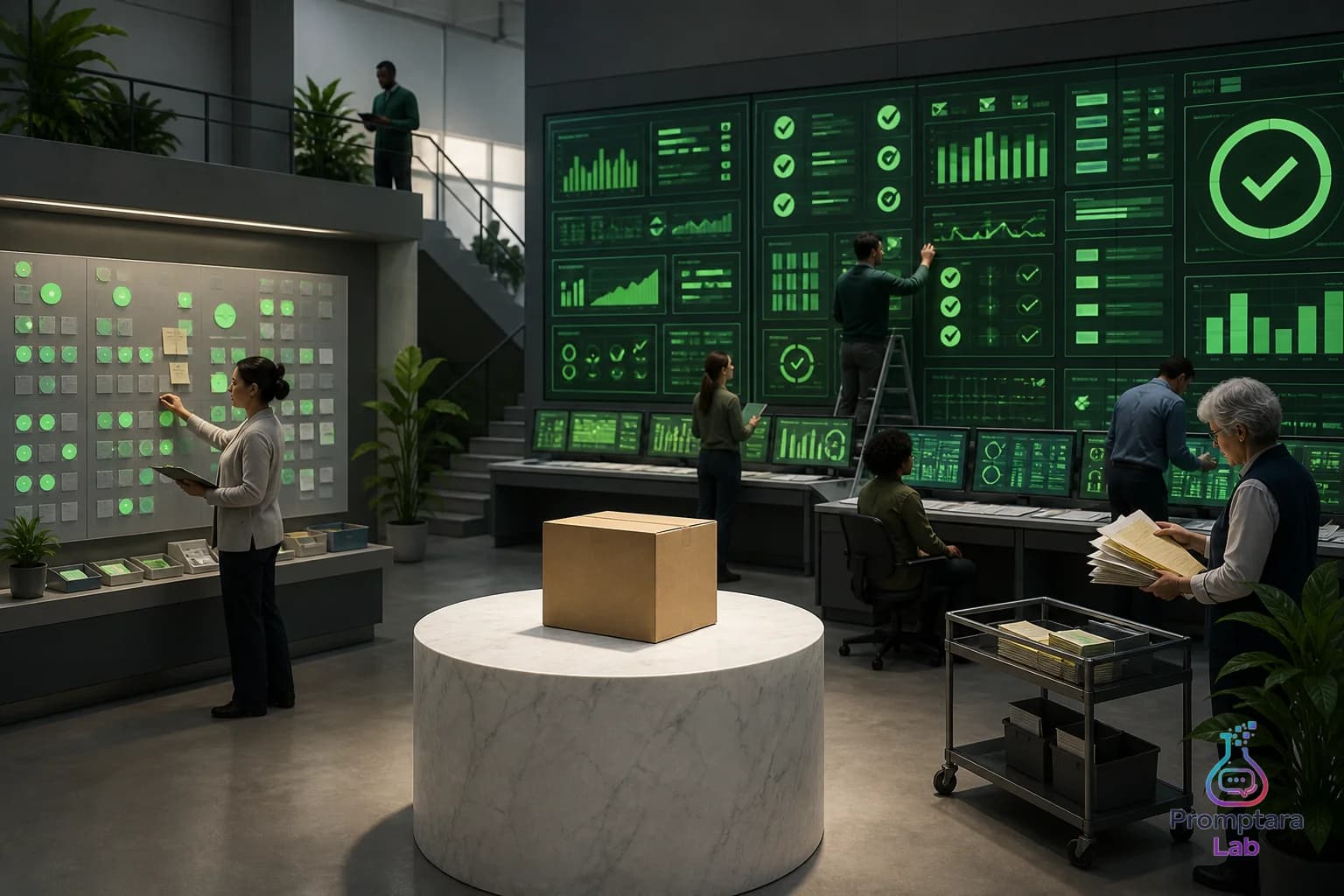
This is why measurement coverage has to be treated like product inventory, not dashboard decoration. A blank field, a zero, and an unavailable metric are three different objects. We covered that more directly in A Missing Measurement Is Not Zero.
The wry version: the dashboard is allowed to be boring. It is not allowed to be theatrical.
Fast systems need refusal built in
A portfolio of small AI assisted products has more surfaces than attention. That is the whole reason to use automation in the first place. The agentic framework under the hood of Promptara Lab can collect signals, prepare content, generate artifacts, and hand off to a publication engine faster than a person would want to do by hand.
Fine. Good. Useful.
But speed without refusal just moves cleanup downstream.
The better operating principle is simple: automate the boring motion, not the right to be certain.
That means the system should have first class states for “observed,” “candidate,” “drafted,” “sent,” “held,” and “not enough evidence.” Those states are not semantic fussiness. They are the difference between an operating system and a content cannon.
A brake pedal does not make the machine less powerful. It makes power usable indoors.
If the automation cannot stop, it is not mature. It is just enthusiastic.