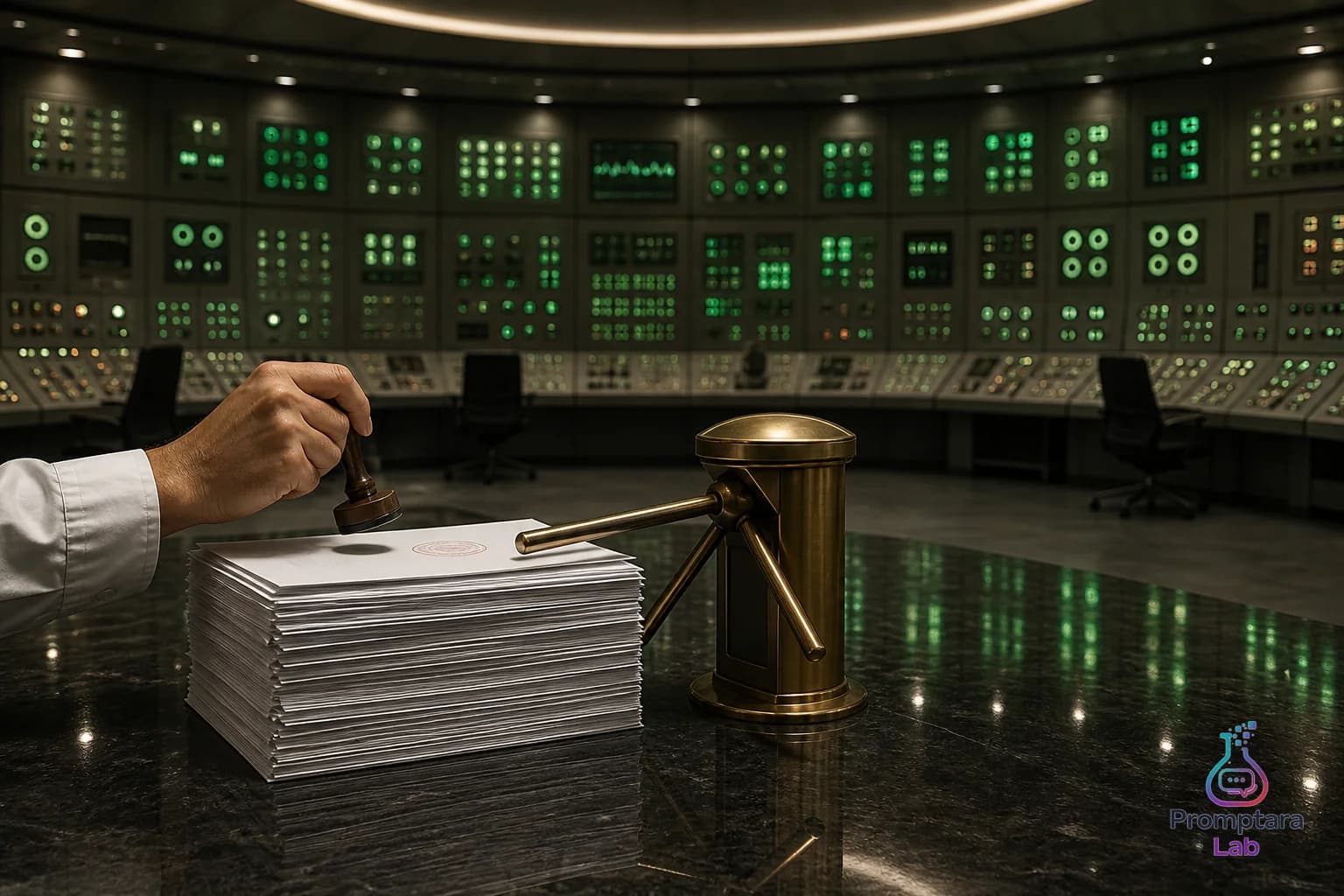
Every Receipt Needs a Clock
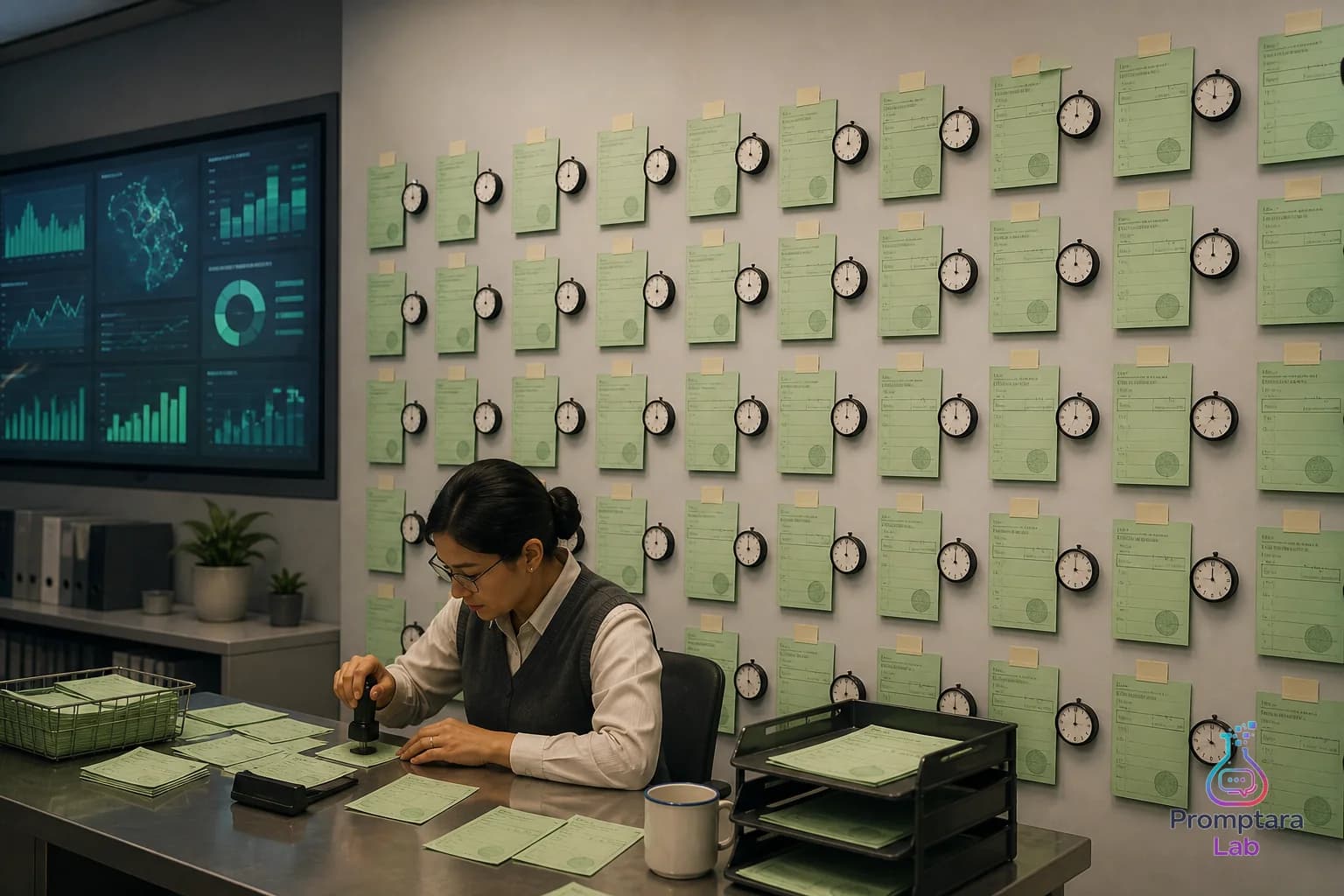
A receipt without a clock is dashboard theater.
It can still be accurate. That is the annoying part. A health check can be genuinely green. A usage report can count the right requests. A queue can really be unchanged. A publication engine can really create drafts. None of those facts automatically says what an operator should do next.
The missing field is time.
Not time as decoration. Not a polite timestamp shoved into the footer so the system can look serious. Time as part of the evidence itself. When was this observed? What period does it cover? How long should it stay trusted? What decision is it allowed to support?
At Promptara Lab, this comes up constantly because an agentic framework under the hood can produce several kinds of receipts in the same operating pass. Some are live safety signals. Some are accounting records for the prior day. Some are traffic snapshots from an earlier report. Some are draft inventory created by a publication engine. They can sit near each other on a dashboard, but they do not have the same clock.
Pretending they do is how a neat system becomes quietly useless.
The timestamp is part of the data
A count without time is not a count. It is a prop with arithmetic printed on it.
Four API requests means one thing if it describes the current hour. It means another thing if it describes yesterday. It means something else again if the report was generated today but the period covered was yesterday. Same number, different operating meaning.
A queue total works the same way. If a router checks intake and reports zero updates while the total stays at 36, that is a useful receipt for that observation window. It does not mean the queue is harmless forever. It does not mean the queue was inspected deeply. It does not mean the items are still relevant. It means the system looked during a defined window and did not move anything.
That distinction is boring until it saves the operator from inventing a story.
A missing clock lets every number cosplay as current. That is worse than a missing number, because it looks usable. Promptara Lab has argued before that a missing measurement is not zero. The sibling rule is that an undated measurement is not current. It is evidence with the label rubbed off.
Completed at a moment is not complete enough
Completed successfully is a runtime receipt. It says a job reached the end of its assigned path without falling over. Good. Keep it. Do not sneer at green checks. They are useful.
Just do not promote them into status models.
A backup completion, a health receipt, and a notification sent flag all describe execution. They do not describe whether the product surface improved, whether a user did anything, whether a draft should publish, or whether a queue deserves attention. The completion happened at a moment. The decision usually lives after that moment.
That is why the clock belongs beside the verb. Completed when? Covered what period? Notified whom? Still actionable for how long?
This is the same argument behind Completed Successfully Is Not a Status Model, with one extra annoyance: even a decent status label decays. Healthy at 04:30 is not a lifetime achievement award. Draft created two days ago is not fresh publication intent. Traffic observed on one date is not today’s appetite.
The clock keeps the receipt in its lane.
Do not stack different clocks into one story
Automated systems love to put unlike evidence next to each other because tables are cheap.
A current health check. A prior day usage bill. A traffic intelligence snapshot from an earlier date. A draft record from a publication run. A queue count that did not move. A small user action attached to a particular day.
All of those can be true. They should not be blended into one mood.
The bad version sounds tidy: the system is healthy, costs are low, drafts exist, traffic exists, actions are sparse, therefore the portfolio is doing fine or not fine. That sentence is too smooth. It hides the clocks.
A better operator reads the lanes separately:
- Live safety evidence asks whether the machine is awake enough to trust.
- Cost evidence asks whether yesterday’s automation spend was proportionate to the work it produced.
- Traffic evidence asks what user behavior was visible during that report window.
- Draft evidence asks what review inventory now exists.
- Queue evidence asks whether something changed, stalled, or simply remained uninspected.
Same dashboard, different clocks, different permissions.
This is also why cost belongs near output, not in a lonely finance corner. A small bill can still buy a pile of review work. A tiny usage line can still deserve inspection if it produced inventory that someone must carry. Promptara Lab covered that relationship in Put the Meter Next to the Machine.
The age of evidence changes the question
Old evidence is not garbage. Stale is not the same as false. This is where people get sloppy.
A traffic snapshot from an earlier date can still be useful if the question is pattern recognition. It is weak if the question is what to change right now. A draft record from a prior run can still be useful as inventory. It is dangerous if the operator treats it as fresh intent. A usage report for yesterday is perfect for accounting. It is not a live throttle.
The product question should change with age.
For a current health receipt: can the system keep operating?
For a prior day usage receipt: was the cost worth the generated work?
For a traffic snapshot: what did users do during that measurement window, and what did they not do?
For a draft package: is this still worth review, or has its moment passed?
For an unchanged queue: is this stability, neglect, or simply no new intake?
The timestamp does not answer those questions. It prevents the wrong question from getting asked with confidence.
Better receipts are boring on purpose
The useful receipt is not dramatic. It does not need a fireworks animation or a triumphant subject line. It needs enough boring structure to stop the operator from hallucinating progress.
A good receipt should say:
- when the observation happened
- what period the data covers
- what state changed, if any
- what state did not change
- what decision is now invited
- when the receipt should stop being trusted without rechecking
That last line is the one most systems skip. They record creation time but not trust life. So the dashboard becomes a drawer full of old receipts, all technically real, all slightly too willing to be useful.
The wry part is that none of this requires a grand new product philosophy. It requires the system to admit that time changes evidence.
A green check with no clock is a souvenir.
A count with no period is a rumor wearing shoes.
A draft with no age is review debt in a nice shirt.
Put clocks on the receipts. Then let each receipt make only the claim it is old enough, fresh enough, and specific enough to make.