
Gates Make Automation Honest
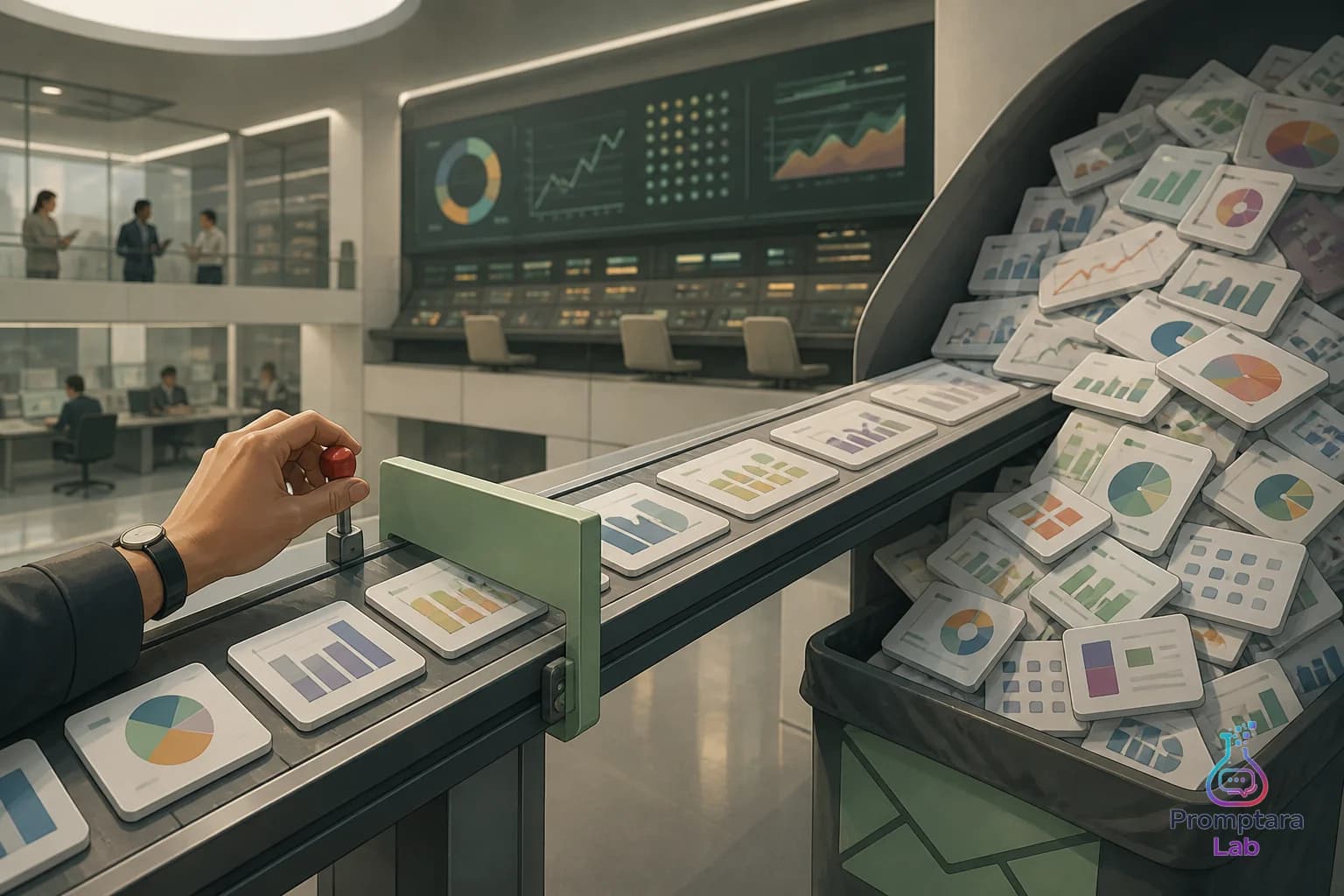
Automation without gates is just a conveyor belt with good posture.
It can observe. It can summarize. It can draft. It can notify. It can package. It can count. The problem is not that the machine does too much. The problem is that, without gates, every stage quietly borrows authority from the stage before it.
Seen becomes accepted. Accepted becomes important. Drafted becomes ready. Notified becomes urgent. Traffic becomes demand. A clean run becomes a product fact.
That is how small automated systems get weird. Not because the model got mystical. Because the workflow forgot where judgment is supposed to live.
At Promptara Lab, the boring design preference is simple: put gates between verbs. The agentic framework under the hood can move a lot of material, but the useful part is not movement. The useful part is controlled movement.
A gate is where a verb stops pretending
Most systems label objects. Observations. Opportunities. Drafts. Messages. Actions. Visitors. Queue items.
Fine. Nouns help inventory the room.
But gates belong between verbs: observe, insert, propose, draft, review, publish, notify, act. Each verb should have a clear permission boundary. If the system observed 90 items and inserted 9, that is not a failure of the other 81. It is the gate doing its job. If 39 opportunity candidates exist after that, those candidates still have not become work orders. They are options with paperwork.
People get this wrong because automated output looks more finished than it is. A neat candidate list feels selected. A polished social draft feels ready. A notification feels like a decision has happened. Usually it has not. The machine has prepared the next object in the chain.
That is why gates need names that are less flattering and more accurate. Drafted. Held. Ignored. Accepted. Rejected. Waiting. Needs review. Published. No action. No input.
The less glamorous label is often the safer one.
Draft is a gate, not a lesser publication
A draft is not a weak post. It is a deliberate holding state.
Publication engines are good at making draft objects look tidy: caption, link, media, destination, status. That tidiness is useful, but it is also where operators get lazy. If a draft has a good sentence and a valid link, the temptation is to treat review as a quick grammar lap. That misses the actual question: should this object move through the gate?
Does the destination match the format? Does the source material support the claim? Is the image suitable? Does the caption create obligations the product cannot honor? Is the topic stale, duplicated, or too thin? Is the system about to turn inventory into public surface just because the packaging looks expensive?
This is why a draft needs a bill of materials. The operator should be able to inspect what is inside the box before deciding whether it leaves the warehouse.
Draft status is not embarrassing. Draft status is the gate saying: not yet, and that is allowed.
Quiet gates still have to report what they did
A gate that passes nothing still needs to be legible.
Consider an intake check that sees 0 updates, takes 0 messages, and leaves the queue unchanged at 15. That line should not be inflated into drama. It also should not vanish into the floorboards. The useful information is that the gate ran, inspected the lane, accepted nothing, and preserved the backlog.
That is different from a broken intake path. Different from missing measurement. Different from a queue that secretly drained. Different from a system that never checked at all.
The quiet gate has a job: prove that silence was produced by policy, not by blindness.
This is where a lot of automation dashboards become too polite. They show green completion and hide the refusal, the no op, the unchanged count, or the reason nothing moved. Then the operator has to guess whether the system was calm, useless, blocked, or asleep. Guessing is not operations. It is horoscope work with timestamps.
A good gate says what it inspected, what it accepted, what it refused, and what stayed parked.
Traffic is not allowed through the demand gate by itself
Traffic needs a gate too.
A visit is not appetite. A pageview is not intent. Even a small burst of visitors is not a product conclusion until it meets an action surface. The action may be a signup, contact message, claim check, match submission, search, follower event, or whatever the product honestly asks for.
The same traffic count can mean several things depending on what happened next. Seven visitors and no same day action is not the same shape as two visitors and one action. Neither should be stretched into a grand theory. One is a diagnostic branch. The other is a small signal that deserves inspection, not applause.
This is why traffic without actions should stay in its own lane. Let traffic through the visibility gate. Do not let it sneak through the demand gate wearing a fake mustache.
The refusal path is product design
The gate is not there to slow the operator down for sport. It is there to preserve meaning.
A system that accepts every observation creates review debt. A system that drafts everything creates editorial debt. A system that publishes from draft without inspection creates trust debt. A system that notifies on every harmless event creates attention debt. A system that treats every visitor as demand creates strategy debt.
Debt is not always bad. Sometimes it is a conscious tradeoff. But it should not be smuggled in by a workflow that never learned to say no.
The better posture is to make refusal visible and boring. A rejected candidate is not waste. A draft held back is not failure. A queue unchanged is not necessarily neglect. A quiet notification path is not broken if its contract says silence means nothing crossed the threshold.
Promptara Lab keeps returning to this principle because automation makes movement cheap. Judgment did not get cheaper at the same rate.
So the gate has to carry more of the product design. It decides which verbs are allowed to hand material to the next verb. It keeps evidence from dressing up as conclusion. It protects the operator from a machine that is very proud of filling rooms.
A good gate is mildly annoying in the best possible way. It asks: should this move, or do we just like that the machine can move it?