
Founder Journal: Listening Is the Easy Part
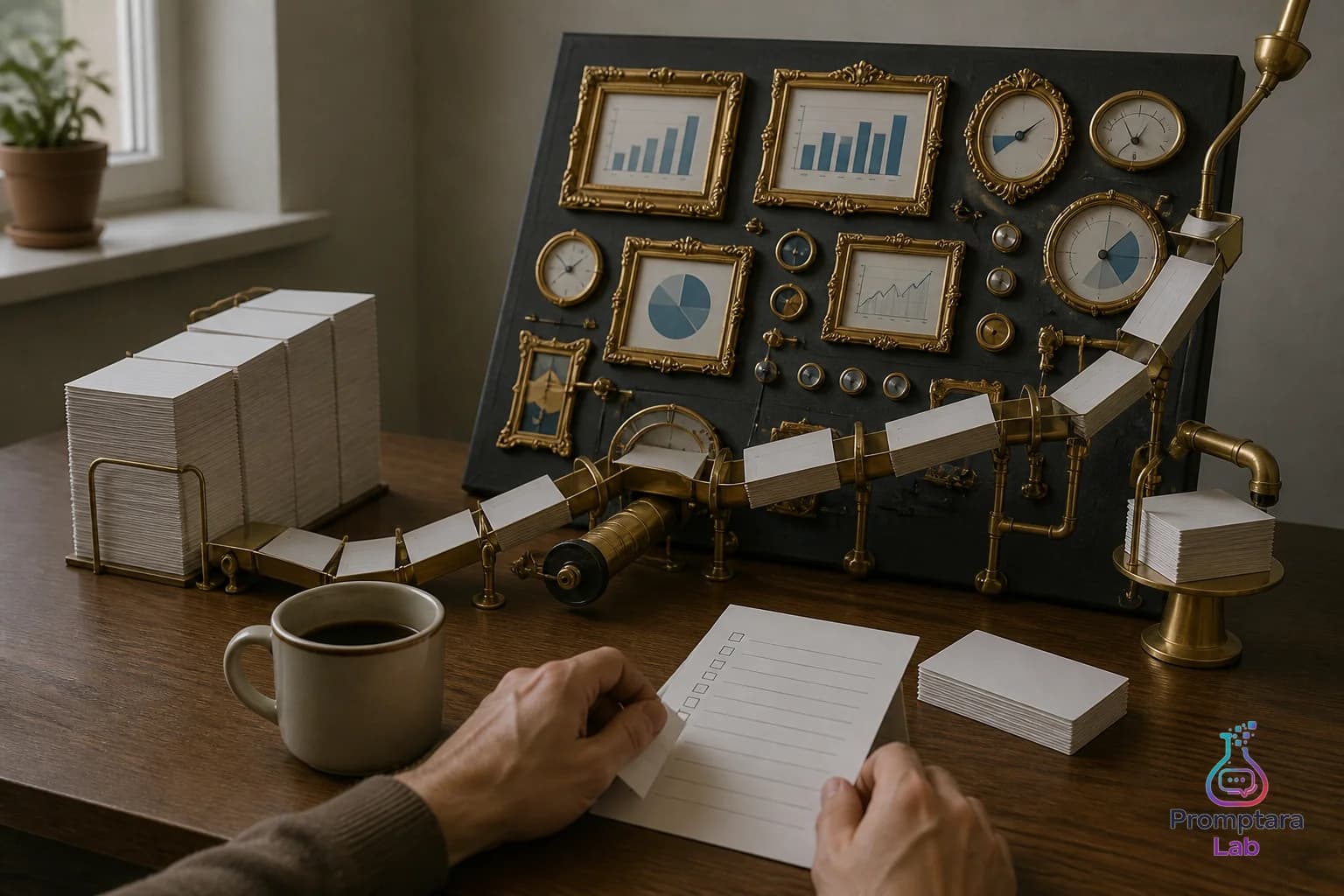
The agentic framework under the hood of Promptara Lab had a very competent little listening week.
Across the available signal runs, it reported 1,117 observations, 70 inserted observations, and 375 opportunity candidates across the portfolio. That sounds productive, and in a narrow sense it was. The machine looked around. It kept source shaped evidence. It found new rows in some places and refused new rows in others. It did not need a meeting, a mood, or a second coffee.
The danger is that a listening system can make a founder feel informed before anything has actually been decided.
The latest traffic snapshot was much less theatrical. Promptara Lab had 1 visitor and 1 pageview. Zero Drama Security had 2 visitors and 2 pageviews. Several other assets sat at 0 or 1 visitor for the snapshot. The action panel was quieter still: current day actions were zero across the listed action types, with no strongest traffic to action signal. Some week and month totals existed for a few assets, but not enough to turn the day into a demand story.
So the week was not about discovery becoming traction. It was about the distance between hearing more and knowing what to do next.
That distance is where small automated businesses either get sharper or quietly drown in tidy lists.
Listening is cheaper than deciding
The daily API usage meter for September 17 reported $1.579662 across 19 requests, with 105,996 input tokens and 42,823 output tokens. That is a small bill. It is also the kind of small bill that can hide the expensive part.
The expensive part is not the run. The expensive part is the human minute that follows it.
A signal system can inspect outside language, produce candidates, and file neat records faster than I can review them with any seriousness. That is not a complaint. It is the point of having the machinery. But once the system can listen cheaply, the operating constraint moves. The question stops being can we gather more evidence? and becomes which evidence is allowed to interrupt judgment?
This is where a lot of AI assisted portfolios get goofy. They build ears everywhere, then act surprised when every asset starts whispering homework.
Promptara Lab has been circling this for a while: Output Is Inventory, Not Progress. This week was another receipt. The 375 opportunity candidates are not progress by themselves. They are inventory. Some may be useful. Some may be duplicates in better clothes. Some may be too vague, too early, too disconnected from an actual product surface, or simply not worth a review slot this week.
A small portfolio does not need infinite listening. It needs a workbench.
The uneven rows were the useful part
The portfolio totals are less interesting than the shape underneath them.
BrewMatch reported 126 observations, 0 inserted observations, and 34 opportunity candidates. One Perfect Park Day reported 83 observations, 28 inserted observations, and 13 opportunity candidates. What Bin Is This reported 123 observations, 1 inserted observation, and 44 opportunity candidates. FSA Ready reported 90 observations, 0 inserted observations, and 12 opportunity candidates.
Those rows are not grades. They are questions.
BrewMatch seeing a lot and inserting nothing is not automatically bad. It may mean the existing memory already covers the fresh material. It may mean the filter is too tight. It may mean the sources were repetitive. One Perfect Park Day inserting 28 new observations from 83 seen is not automatically good. It may mean the outside world moved. It may also mean review debt arrived with a smile.
The mistake would be averaging all of that into one portfolio mood. The asset level differences are the operating surface.
Promptara Lab's own signal run showed 93 observations, 12 inserted observations, and 40 opportunity candidates. The source mix was visible: 81 autocomplete observations and 12 Reddit observations. That mix matters. Search suggestions and forum posts do not speak the same dialect. One tends to show query phrasing. The other tends to show complaint texture, confusion, or lived context. If those get flattened into one bucket called opportunities, the system becomes cleaner and less useful at the same time.
That is why Source Mix Changes the Question keeps earning its place in the operating doctrine. The source is not a footnote. It changes how aggressively a candidate should be trusted, grouped, parked, or ignored.
Publishing did not rescue the signal
The publication side also did useful work this week, but not the kind that should be allowed to launder the signal story into progress theater.
The publication engine prepared draft records for BrewMatch, BaldRoutine, and What Bin Is This on September 16. Each package carried channel specific copy and media status. BrewMatch had a draft around repeatable grinder settings and bitter coffee. BaldRoutine had a draft around dry bald scalp checks before buying another moisturizer. What Bin Is This had a draft about aerosol cans and recycling.
Those are concrete outputs. They are also still draft inventory until reviewed and published through the appropriate surface. Even when drafts are well formed, they do not prove that the signal system selected the right opportunity, that the page answered a real demand, or that the asset earned attention.
Zero Drama Security also had a completed weekly MDX recap package and a prepared LinkedIn link item. Again, useful. Again, not demand.
This is the dull discipline: do not let one successful subsystem provide emotional cover for another unresolved question. A publication engine can package. A signal system can listen. A traffic snapshot can report quiet. Those facts can coexist without needing a heroic narrative to staple them together.
The latest traffic and action snapshot was clear enough: traffic without actions appeared across the listed assets, and there was no strongest traffic to action signal. That is not a verdict on the portfolio. It is a constraint on interpretation.
The workbench needs fewer objects on it
The next move is not to turn the listening system off. That would be a very founderish overcorrection: discover too much, panic, then call blindness focus.
The better move is to make the review contract more explicit.
A candidate should earn a place on the workbench only if it carries enough context to support a decision. What asset is it for? What source produced it? Is it new, repeated, or newly important? Does it point toward content, product UX, pricing, onboarding, support, or nothing yet? Is there any action or traffic evidence nearby, or is it only language from the outside world?
If the answer is thin, the candidate can stay parked. Parked is not failure. It is cheaper than pretending every signal deserves a human minute.
The week also reminded me that zero activity has to stay typed. No current day contact submissions is different from no visitors. No inserted observations is different from no observations. No same day actions is different from no week or month actions. No recent git commits is different from no operating change, though that is not the main story this time.
Evidence needs labels before it needs drama. Promptara Lab has a whole note on that in Evidence Needs Handling Instructions, and this week made the point with less elegance and more rows.
What I am taking from the week
The useful founder lesson is not that the portfolio needs more automation. It already has enough machinery to listen across assets, count usage, prepare drafts, check queues, and report health. The useful lesson is that listening capacity has started to outrun review capacity in a visible way.
That is not a crisis. It is a design prompt.
The operating system needs to keep separating what was seen, what was newly stored, what became a candidate, what became a draft, what got traffic, and what produced an action. Those are different verbs. Compressing them into one progress story would be tidy and wrong.
This week, the machine listened. The founder job is to make sure listening does not become a chore factory with better formatting.