The Catch-All Bucket Is Product Debt

Catch-all buckets feel practical. They are also how product judgment goes to nap.
Every operating system has them. Misc. Other. General. Later. Power user. Recycle. Draft. Needs review. Good enough. The label changes, but the smell is the same: the system did not know what decision to make, so it created a padded drawer and called it workflow.
That is not always a sin. A small product needs places to park uncertainty. The problem starts when the parking lot becomes a neighborhood.
At Promptara Lab, this shows up across tiny product surfaces, publishing systems, signal intake, and analytics. The recurring lesson is boring in the best way: a bucket is not just a category. It is an operating promise.
A bucket is a promise about what happens next
A recycling bin is not a bin for things someone feels guilty throwing away. It is a promise that the material inside can survive a specific downstream process. Put clothes in curbside recycling and the label did not merely become inaccurate. It created work for the next system.
The same thing happens inside software products.
A SaaS admin role called power user sounds tidy until it becomes a dumping ground for every permission nobody wants to think about. Now the role no longer describes a person or a job. It describes avoidance.
A guest room wall filled with leftover art does the same thing in a softer domain. The room got decorated, technically. But the category was not guest room art. It was stuff we had around. The system completed the task while dodging the taste decision.
Coffee has a version too. More grounds can look like a stronger answer, until the cup turns bitter. The ratio was the bucket. Overfilling it was not ambition. It was a category error wearing an apron.
Good buckets constrain behavior. Bad buckets absorb embarrassment.
Automation makes vague buckets faster
Manual systems can survive a little vagueness because humans slow them down. Someone squints. Someone asks a follow-up question. Someone ignores the field because everyone knows it is junk.
Automation removes that social friction.
An agentic framework under the hood of a product portfolio can gather signals, draft content, prepare publication records, and move work between states quickly. That speed is useful only when the categories are honest. If the system has a vague bucket, it can fill the vague bucket at machine tempo. Congratulations, the junk drawer now has throughput.
This is what people get wrong about automation quality. They look for hallucinations only in sentences. The quieter failure is hallucinated certainty in categories.
A draft that needs review is fine. A draft marked ready because the system did not have a cleaner state is a problem. A signal that repeats known information is fine. Treating it like fresh opportunity because the intake bucket only says observation is lazy bookkeeping. A visitor who does not act is not proof of disinterest if the action surface is broken, unclear, or missing. That is not a philosophical nuance. It changes what a builder does next.
The old note A Missing Measurement Is Not Zero covers the measurement version of this. Missing is a hole. Zero is a number. Other is also a hole, unless the system can explain why the thing belongs there.
The catch-all should be temporary, not comfortable
There is a legitimate role for catch-all states. Products meet edge cases before they have names. Automation sees inputs that do not fit the current map. A portfolio will always find some weird little seam that no schema designer predicted over coffee.
So the rule is not never create Other.
The rule is make Other uncomfortable.
A healthy catch-all has three properties:
- It records why the item did not fit.
- It gets reviewed before it becomes normal.
- It either graduates into a named bucket or gets deleted.
Without those properties, Other becomes a landfill with a filter bar.
The same applies to operational states. Unknown, not measured, needs human decision, jurisdiction dependent, blocked by missing evidence, duplicate, and out of scope are all more useful than Misc. They are uglier labels, which is part of their charm. They make the tradeoff visible.
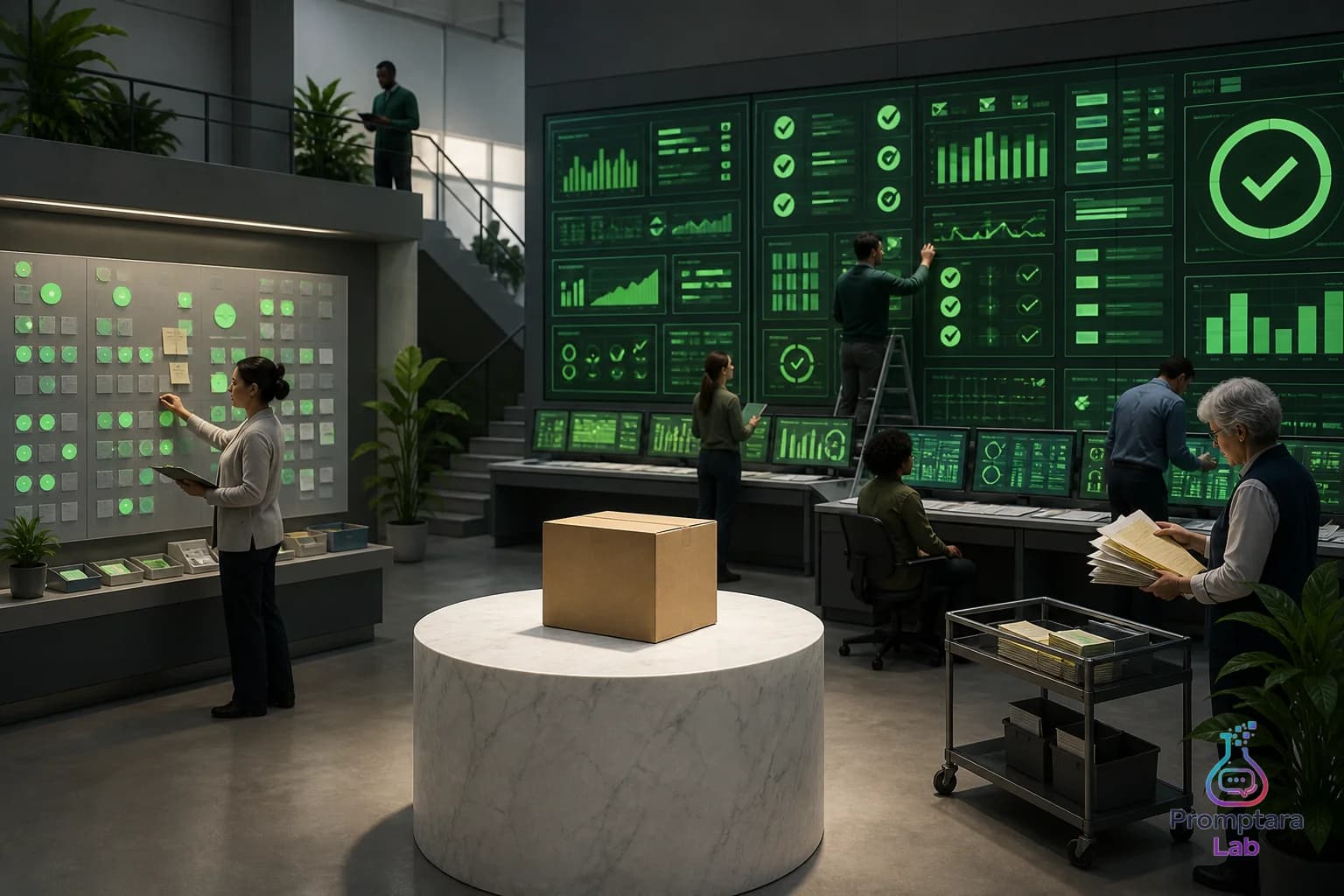
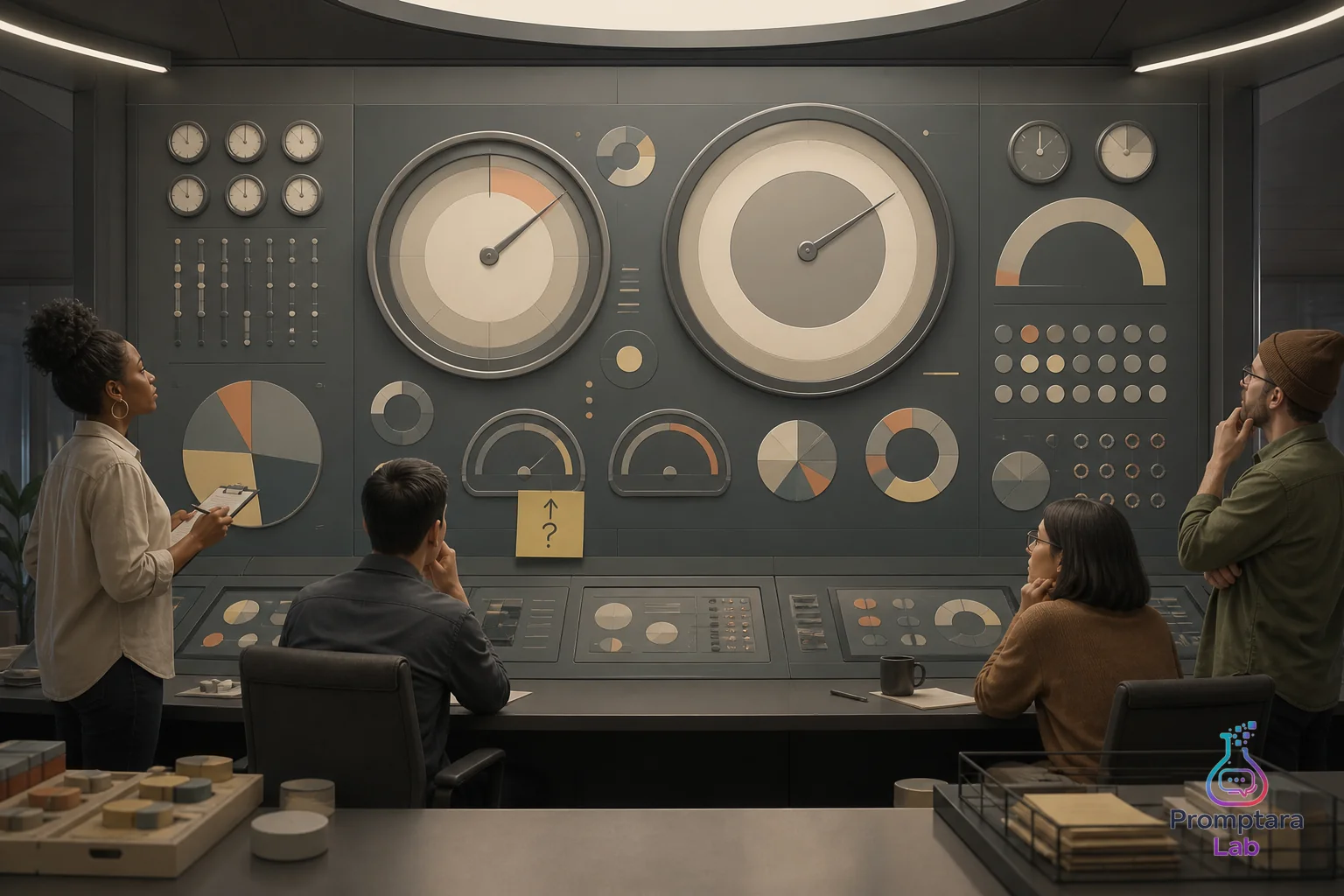
A polished dashboard can hide this damage beautifully. That is the trap. A dashboard with ten clean categories and one bloated Other is not clean. It is wearing a tuxedo over a plumbing leak.
Use the reverse decision test
Here is a practical test that keeps showing up in small product systems:
Can a stranger reverse the decision from the bucket name and the available evidence?
If an item is marked duplicate, the stranger should be able to find the original. If something is marked not measured, they should understand that the system lacks coverage, not demand. If a content item is marked draft, they should know whether it is waiting on editorial judgment, media, scheduling, or compliance with a channel constraint.
If the bucket says General and nobody can reconstruct why the thing went there, the system did not classify it. It postponed the decision and charged interest.
This is also why domain language matters. A coffee ratio, a recycling rule, a permission boundary, and a shaving irritation are not interchangeable content blobs. Their nouns carry the decision logic. The note Domain Nouns Are the QA Check is adjacent to this point: if the nouns are vague, the buckets will be vague too.
Design buckets that annoy the right person
A good product bucket is slightly annoying to the person trying to be sloppy.
It asks for the reason. It separates unknown from no. It refuses to let power user mean everybody with extra buttons. It stops recycle from meaning I do not want this anymore. It makes a builder choose between too bitter, too weak, wrong grind, and wrong ratio instead of writing coffee issue and moving on.
That annoyance is not bureaucracy. It is preserved judgment.
Small teams and solo builders often avoid this because they do not want process overhead. Fair. Nobody needs a ceremonial taxonomy for a three page product. But the opposite mistake is more common now: letting automation multiply vague decisions because the run completed and the outputs look tidy.
A catch-all bucket is not evil. It is a waiting room. Give it a chair, not a mortgage.