Parked Is a First Class State
Most automation systems are too eager to say the run is done.
Fine. A run ending cleanly is useful. Nobody wants mysterious half execution sprinkled across a product system like glitter from a broken craft drawer.
But done is not the same as cleared. It is not the same as selected. It is not the same as published, reviewed, acted on, or worth doing again.
The quieter state is parked.
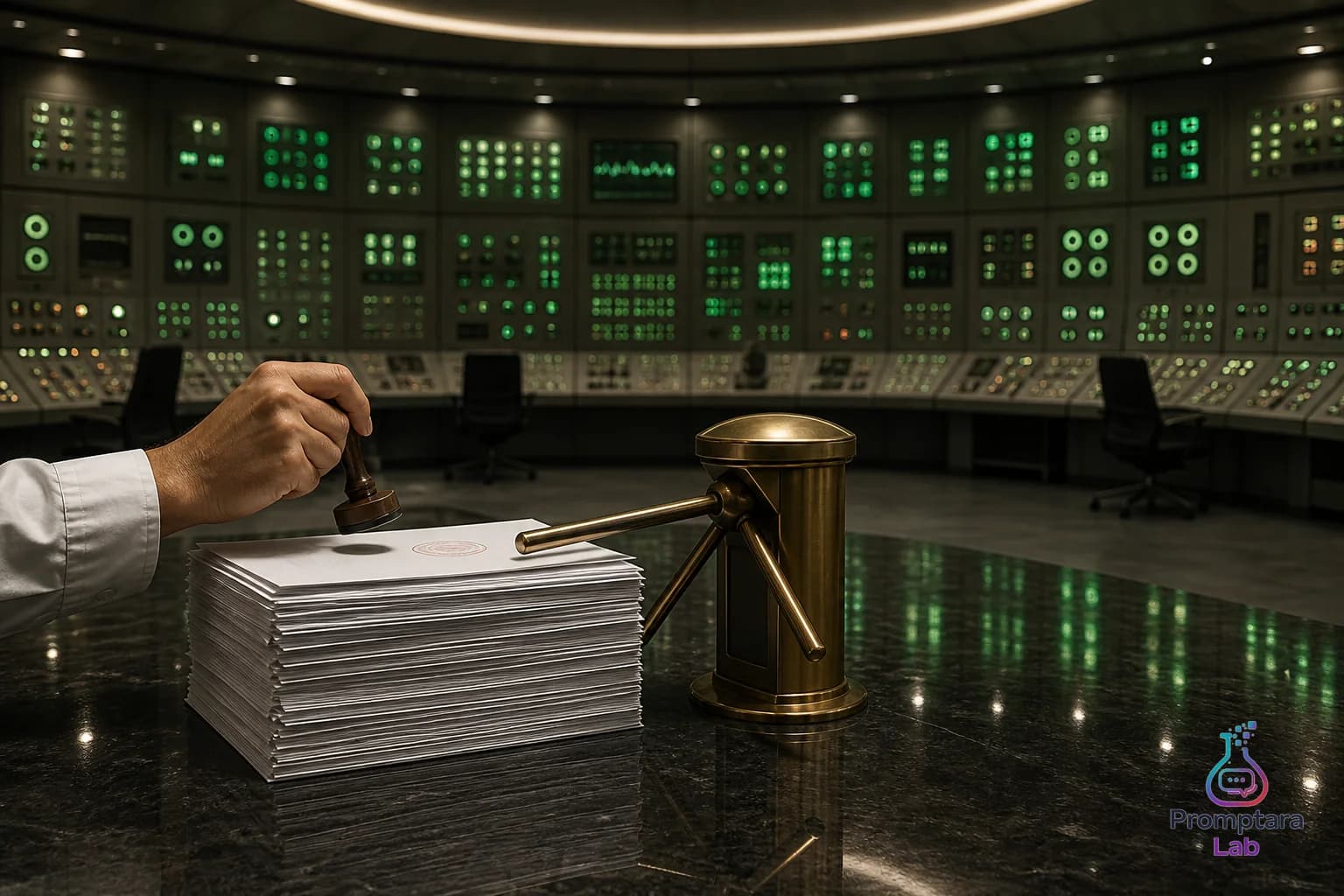
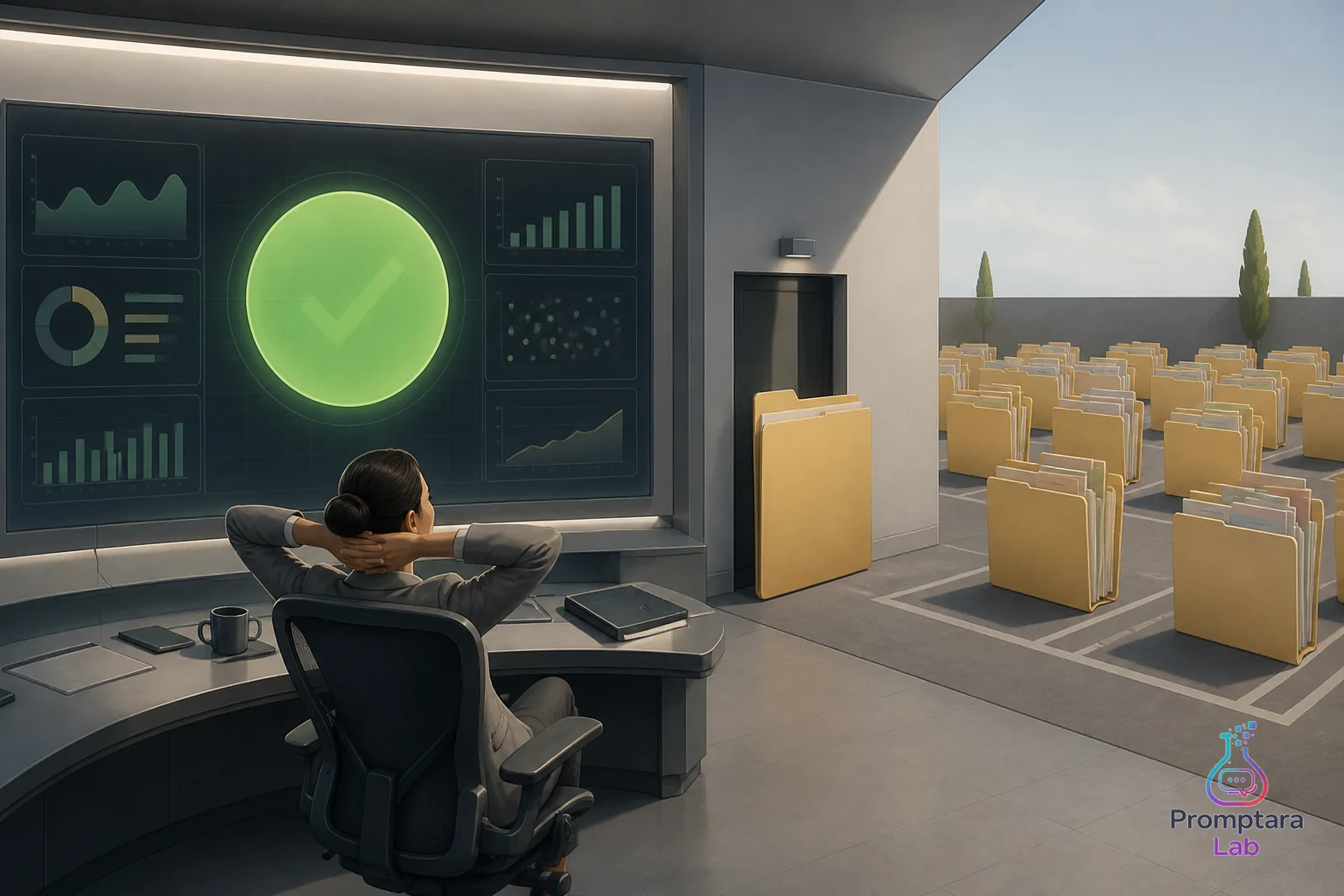
Parked work is not failed work. It is not invisible work. It is work that exists, did not move, and still belongs on the operating map. Small AI assisted systems get into trouble when they treat parked work as a rounding error. Queues stay the same. Drafts get created. candidates accumulate. traffic arrives without action. Costs are logged. The dashboard smiles.
That smile needs a footnote.
At Promptara Lab, the agentic framework under the hood is useful precisely because it leaves traces of these quiet states. An intake check can complete while taking 0 messages and leaving a queue unchanged at 3. Another source queue can remain at 6. A usage meter can report $0.96459 across 23 requests for the prior day. A signal pass can observe 90 items, insert 8, and maintain 37 opportunity candidates. A publication engine can create drafts. A traffic report can show visitors and still say the strongest traffic to action signal is none.
None of those facts is dramatic. Good. Drama is usually where operators go when state modeling failed.
The dangerous word is done
Done is a receipt. It proves a process reached the end of its path. That is not nothing.
The problem starts when done is asked to carry more meaning than it can hold. A completed intake check might mean nothing new was taken. A completed signal run might mean candidates were refreshed, not accepted into work. A completed publication step might mean a draft exists, not that a finished piece has earned attention. A completed usage report might mean the meter worked, not that the spend was wise.
This is why Promptara Lab keeps separating execution evidence from product evidence. The earlier note Completed Successfully Is Not a Status Model covered the status problem directly: completion is one field, not the whole operating language.
Parked is part of that language.
A draft can be parked. A candidate can be parked. A queue item can be parked. A source can be parked. A weak signal can be parked. A cost can be parked beside the output it paid for. A traffic pattern can be parked until there is enough action evidence to interpret it without pretending.
That sounds fussy until the system starts producing more surface area than one person can inspect comfortably. Then fussy becomes cheap insurance.
A queue that does not move is speaking
The laziest reading of an unchanged queue is that nothing happened.
Maybe. Or maybe the system checked, found no eligible intake, preserved state, and left existing work exactly where it was. That is a different fact.
A queue total before and after tells the operator whether the run changed the shape of work. When the count stays at 3 and messages taken is 0, the system did not clear the line. It also did not add to it. It inspected and left the residue in place.
That distinction keeps a small operation from making two opposite mistakes.
One mistake is panic: the queue did not clear, so something must be broken. The other mistake is comfort: the job completed, so there must be nothing to care about.
Both are sloppy.
The better interface says: checked, took none, queue unchanged. If there is a related source queue, it should show that too. Not because the operator needs to stare at every item. Because the operator should know whether the machine moved work, preserved work, or quietly let work age.
A parked queue is allowed. An unnamed parked queue is how tiny systems grow mold.
Parked work needs a reason, not a drawer
There is a difference between parking something and shoving it into a padded drawer labeled later.
Good parked states have reasons. Weak source. Duplicate. Needs human review. Not enough action evidence. Outside the current product promise. Draft created but not reviewed. Candidate created but not accepted. Queue checked but no eligible item taken. Traffic present but no same day action.
Bad parked states have vibes.
Vibes are expensive in automation because the system can create them at machine speed. A signal pass can produce a pile of observations and candidates. That can be useful. It can also become a chore generator wearing a little badge that says opportunity.
The useful move is to make the parking reason visible at the same level as the count. Not just how many candidates exist, but why they are not work. Not just how many drafts were created, but whether they are awaiting review, rejected, scheduled, or intentionally dormant. Not just how many visitors arrived, but whether any action evidence followed.
A product system does not need to act on everything it can see. It does need to remember why it did not act.
Design the interface around residue
Most dashboards are designed around motion: created, completed, sent, generated, updated.
Residue needs verbs too: held, unchanged, skipped, expired, refused, parked.
The earlier Promptara Lab note The Delta Is the Product Surface argued that change is often more useful than totals. Parked state is the companion idea. Sometimes the most important delta is no delta, provided the system says what did not change and why.
That applies to cost as much as queues. A small usage bill is still evidence that the machine ran. The number does not need melodrama. It needs placement beside the work produced, the work held, and the work still waiting for judgment.
It also applies to traffic. If visitors arrive and actions do not, the honest state is not failure theater. It is parked interpretation. There is not enough action evidence yet. The system should say that plainly and resist dressing absence up as insight.
The work of Promptara Lab, publicly, is to keep making these product systems more inspectable without pretending that inspection is the same as success. The public notes live at Promptara Lab, but the principle is portable: if automation can create residue, the interface has to name residue.
The small rule
Treat parked as a first class state.
Not as failure. Not as success. Not as a junk drawer. A state.
If the machine created a draft, say draft. If it saw a signal but did not insert it, say that. If the queue stayed unchanged, say unchanged. If traffic arrived with no action, say no action evidence. If a cost was incurred, put the meter beside the work and the residue.
The payoff is not a prettier dashboard. It is a system that leaves fewer places for false confidence to hide.
Automation does not only move work forward. Sometimes it keeps work still.
That stillness should have a label.