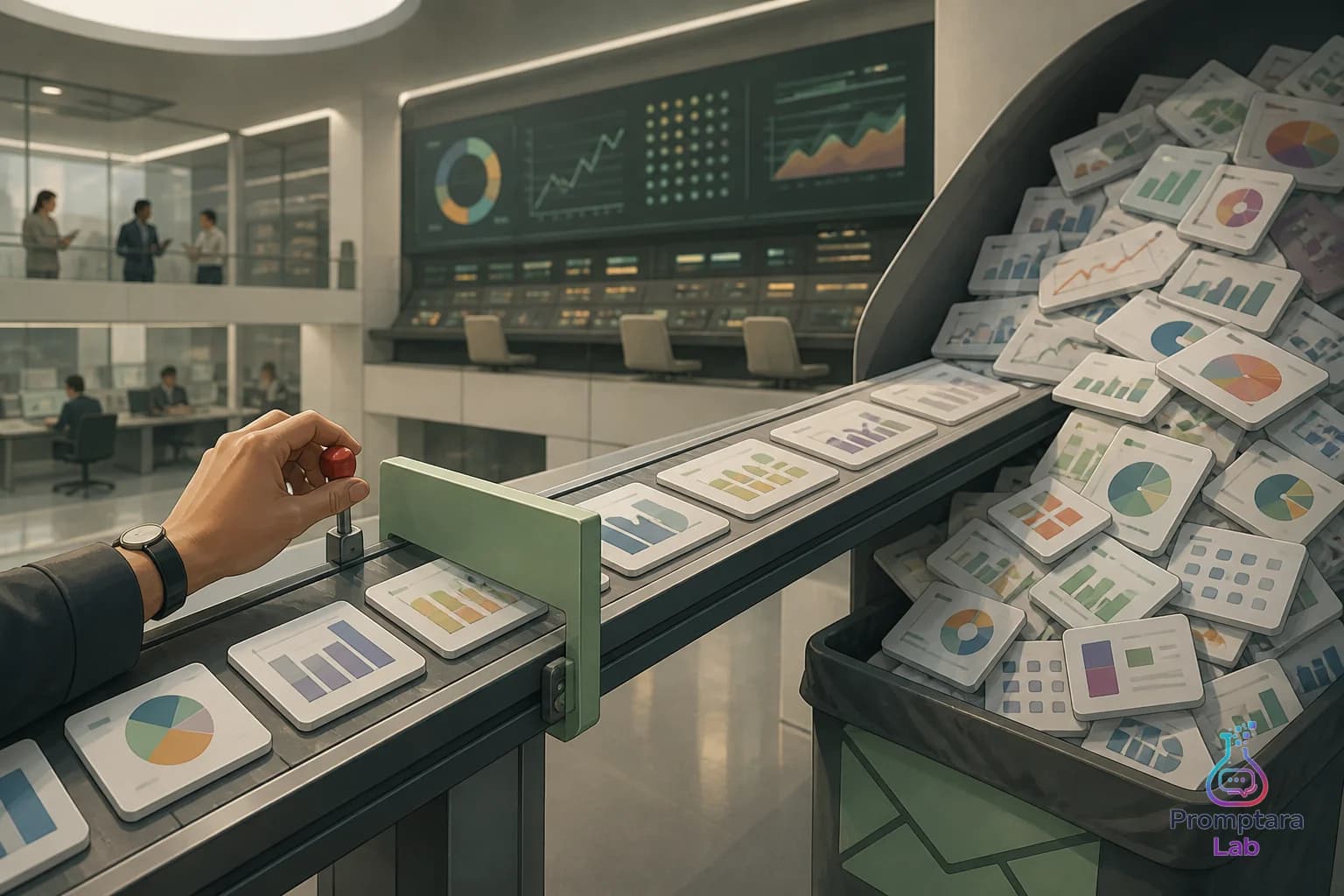
Inspection Depth Is a Design Choice
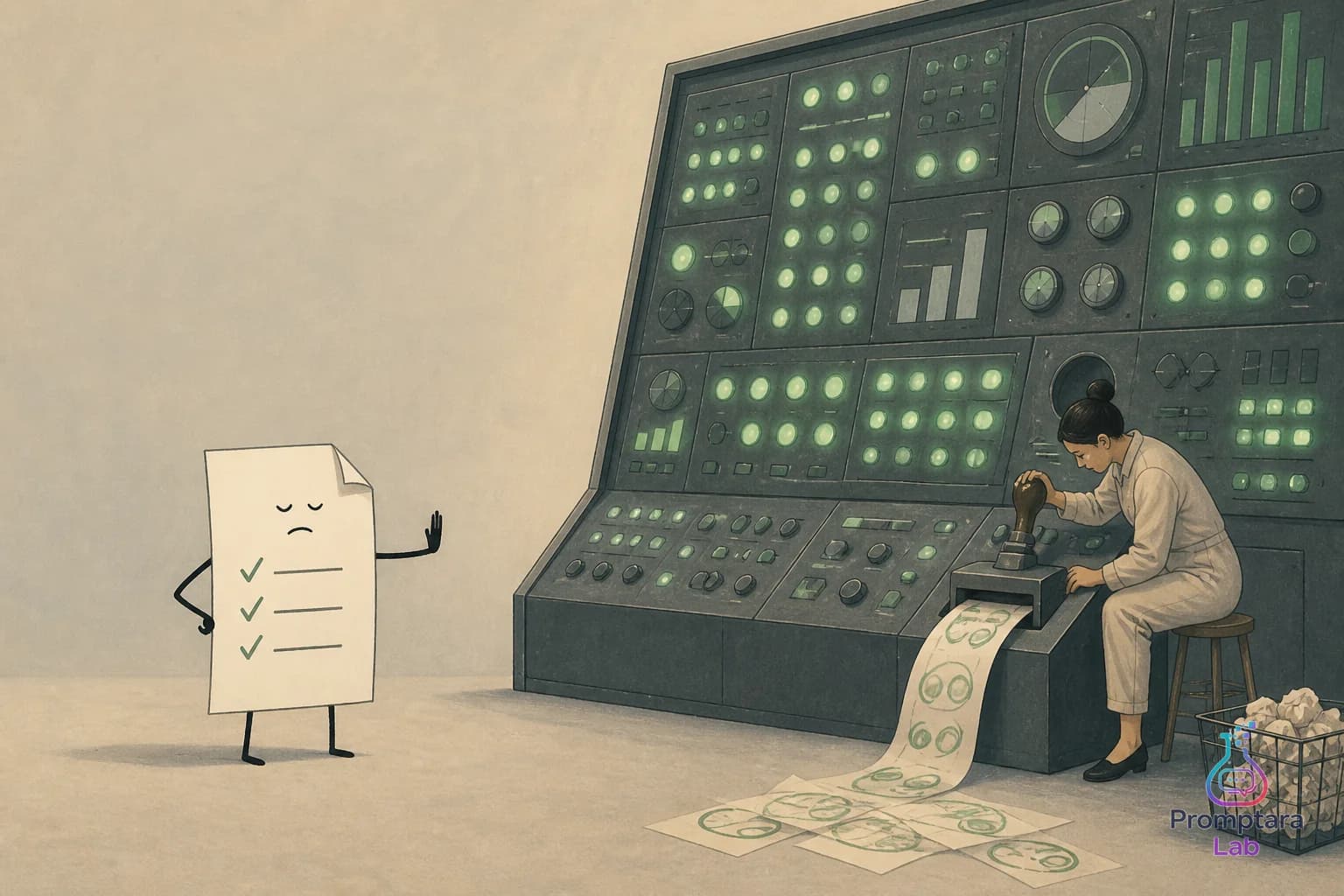
Automation makes review feel binary. Either a person approves the thing, or the thing sits there collecting digital dust. That is a bad model for small product systems.
The better question is not whether an output needs review. The better question is how deep the inspection should go.
A health receipt, a usage meter, a signal candidate, a social draft, and a traffic snapshot are not the same kind of object. Treating them the same is how an operator ends up either rubber stamping work too close to users or line editing material that only needed to be counted and parked.
Promptara Lab keeps returning to this because the agentic framework under the hood can produce a lot of legitimate material without producing a single obvious decision. A usage meter can report 0.178955 in cost across 6 requests. A signal pass can observe 93 items, insert 12, and leave 40 candidates. A traffic readout can show visits without actions and no strongest traffic to action signal. None of those are fake. None of them automatically deserve the same amount of human time.
The cheap object still spends attention
Cheap automation is not free automation. The invoice may be tiny, but the review surface can still be awkwardly large.
That is the part builders often get wrong. They look at low usage cost and assume the system can afford to produce more. Maybe it can. The machine can probably keep going. The operator may not.
A low cost signal run that creates dozens of candidates has moved the expense from compute into judgment. A publication engine that creates tidy draft records has not removed review. It has made the review work more inspectable. That is good, but it is still work.
This is why output should be treated as inventory, not progress. Inventory can be useful. Inventory can also spoil, distract, and make the room look productive while nothing has actually changed for a user.
The fix is not to hate output. The fix is to label the inspection depth before the output starts pretending it is a decision.
Give every object a review depth
A small product system needs a review ladder. Not a committee. Not a ceremonial checklist with fifteen boxes and a sad little signature line. Just a clear idea of what kind of look each object deserves.
One useful ladder looks like this:
Depth 0: record only. The object is a receipt. It proves something ran, counted, or stayed quiet. No judgment required unless it violates an expected boundary.
Depth 1: shape check. The object needs a quick scan for obvious breakage. Does the count make sense? Is the status plausible? Did the package include the parts it claimed to include?
Depth 2: source check. The object needs context. Where did the signal come from? Is it search language, forum language, a traffic clue, a user action, or a generated draft? Source changes what the object is allowed to mean.
Depth 3: user surface check. The object is close enough to users that words, links, media, destination, and promise all need inspection. A draft heading can be fine while the destination or packaging is wrong. That is why a generated draft needs a bill of materials, not just a confident caption.
Depth 4: product decision. The object asks for a change in direction, scope, offer, positioning, or interface. This is not a skim. This is where the operator should slow down.
The point of the ladder is not bureaucracy. It is mercy. It keeps a receipt from demanding a product meeting and keeps a user facing draft from sliding through with receipt level inspection.
Signals and drafts deserve different suspicion
A signal candidate and a publication draft can both look polished in a database. That does not make them peers.
A signal candidate is upstream. It is allowed to be partial. It is allowed to be weird. Its job is to say, maybe look over here. Inspection should preserve source context and decide whether the candidate deserves more attention, not rewrite it into a finished product thought.
A draft is downstream. It has a destination. It carries a public promise. It may include a caption, a link, an image, a channel, and a status. A draft can be wrong in more ways because it touches more surfaces. The words can be good while the packaging is off. The link can work while the claim is too broad. The image can upload while the destination does not deserve the post.
That is why one review mode is lazy. It flatters the operator by pretending judgment is a single muscle. It is not. Skimming a signal pool and approving a public draft are different acts.
No action is not an invitation to fuss
Traffic without actions creates a special temptation. It feels like the system is asking for immediate interpretation. Rewrite the page. Change the offer. Post more. Post less. Panic tastefully.
Maybe. Or maybe the correct inspection depth is lower.
A snapshot that shows traffic without actions and no strongest traffic to action signal is not automatically a product verdict. It may deserve a diagnostic glance: was measurement present, was the call to action visible, was the visitor source relevant, was the sample too small to carry the argument? That is not the same as a full product redesign.
This is where inspection depth protects the builder from overreacting. Some evidence earns a product decision. Some evidence earns a note. Some evidence earns nothing more dramatic than being filed without cosplay.
The system should ask for the depth it needs
The best automation handoff is not just a pile of objects. It tells the operator what kind of inspection is being requested.
Recorded. Shape check. Source check. Approve before publication. Investigate before changing product. Park unless repeated.
Those verbs are small, but they save attention. They stop every successful run from becoming a vague obligation. They also make silence and emptiness less mysterious. A zero action day can be a recorded state, not a tiny existential crisis in dashboard form.
At Promptara Lab, the boring rule is that automation output enters the room with a job, a boundary, and a review depth. That does not make the system glamorous. It makes it less likely to waste the one resource the machine still cannot print: a useful human minute.