Completed Successfully Is Not a Status Model
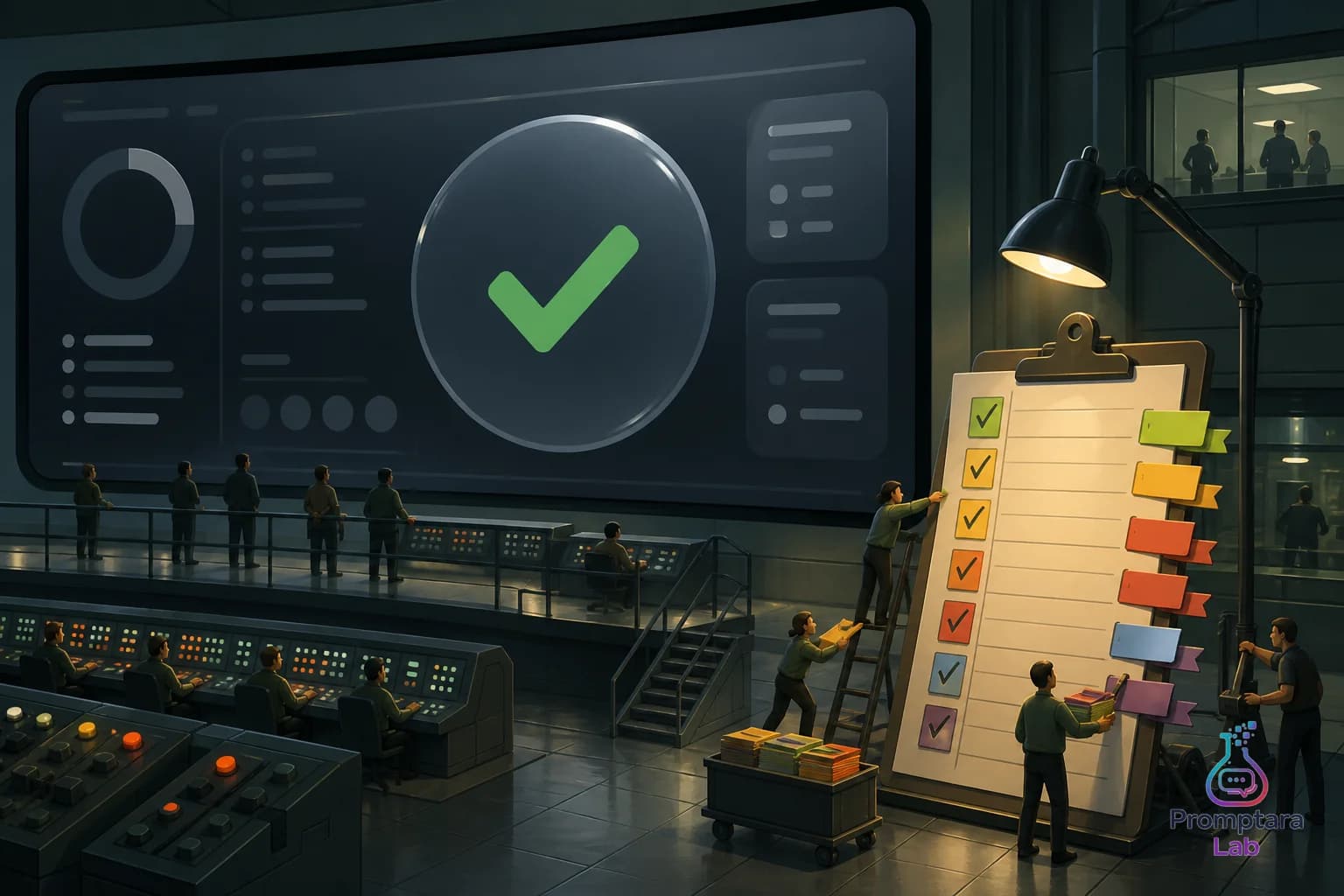
Automation loves the word completed. Operators should distrust it a little.
Not because completion is bad. Completion is useful. A job reached the end of its path. A report was generated. A draft was created. A meter recorded cost. A queue was checked. Fine.
The problem starts when completed successfully becomes the whole status model. At that point the system is not reporting what happened. It is asking the operator to accept a shrug in formal clothing.
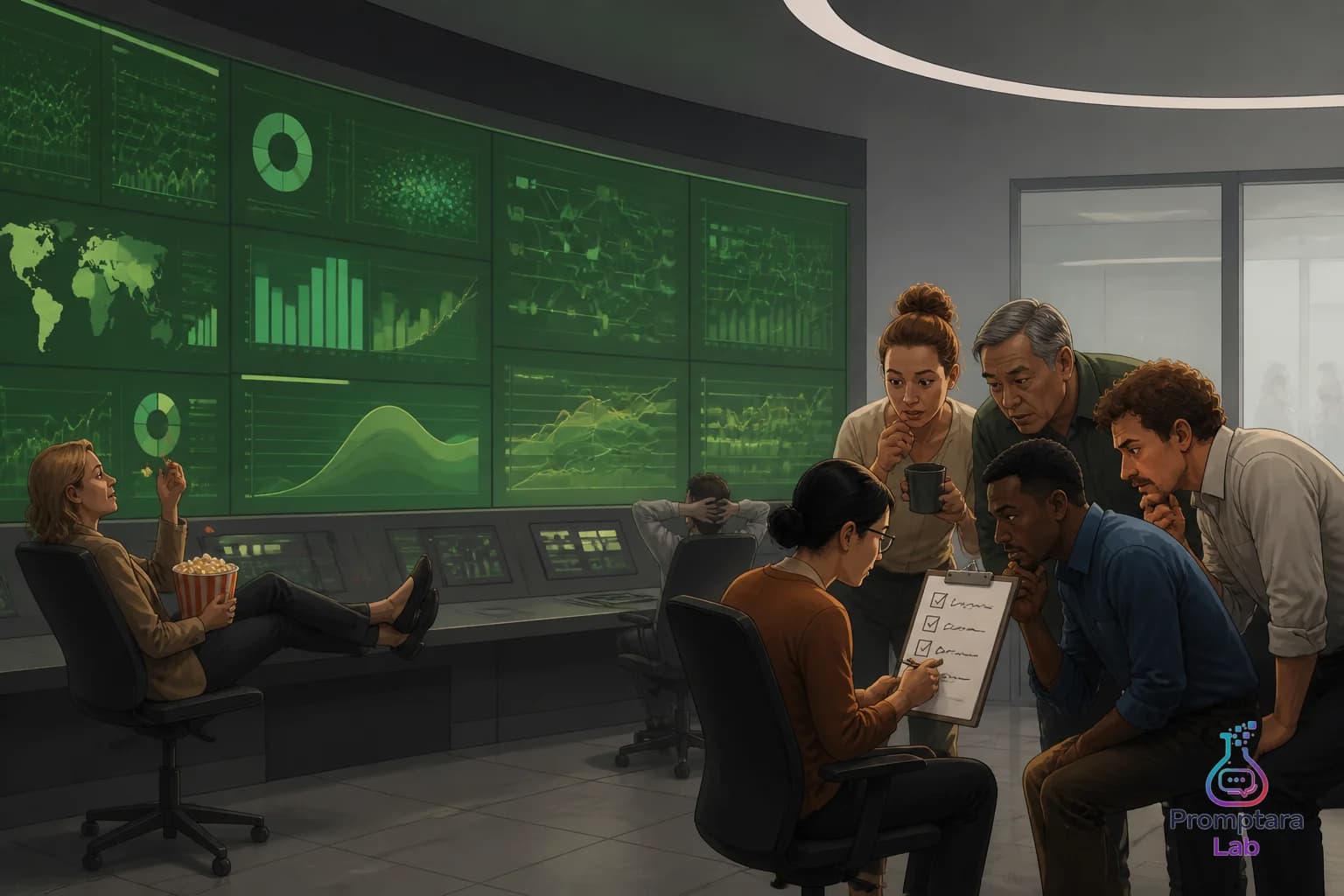
A small AI assisted product system has too many different endings for one green label. It can finish and still raise a warning. It can create a draft that is not published. It can observe nothing new. It can spend money without producing a useful change. It can find a small action in a low traffic surface while busier surfaces produce no action at all.
Those are not the same state. Treating them as the same state is how dashboards become decorative furniture.
Done is only one layer
Completed is a transport receipt. It says the process moved from start to finish without crashing hard enough to stop.
That is one layer of the truth, not the whole object.
A better status model separates at least four questions:
- Did the automation execute?
- Did it change state?
- Did it create something that still needs review?
- Did it raise a condition that deserves attention?
Those questions sound bureaucratic until a real operating surface starts stacking receipts. A usage summary can complete and report 33 requests, 100,012 input tokens, 74,252 output tokens, and a cost of $3.01 for the measured day. That is not automatically good or bad. It is a meter reading. It becomes useful when it sits beside what the work produced and what the operator must decide next.
Promptara Lab has written before about putting cost close to output in Put the Meter Next to the Machine. Status labels need the same proximity. The label should not float above the work like a congratulatory balloon.
Warning should be allowed to exist
A warning is not a failure with stage fright. It is its own state.
This distinction matters in automation because many useful checks should not stop the machine. A health check can complete its run and still return a warning. That is not contradiction. That is precision.
Failure says the system could not do the thing. Warning says the system did the thing, but the result should not be filed under ordinary green.
Builders often flatten this because binary status is easier to display. Green or red. Passed or failed. Done or broken. Nice and tidy, like a drawer full of tangled cables with the drawer closed.
The operator pays for that tidiness later. If warnings look too much like failures, people ignore them to avoid panic. If warnings look too much like success, people miss the chance to intervene while the issue is still boring.
Good warning design is low drama. It does not scream. It does not pretend. It says: completed, but inspect.
That tiny phrase is a better interface than a thousand cheerful green checks. As argued in Notifications Are Interfaces, Not Confetti, the message is not a celebration. It is a control surface.
Draft is a clean boundary
Draft created is a beautiful status because it refuses to overclaim.
A publication engine creating a social draft has not published the post. It has created review inventory. That boundary is worth protecting.
The sloppy version says posted, generated, ready, or done. The precise version says draft created. It tells the operator the artifact exists, the machine performed its part, and the final decision has not been spent yet.
That boundary also protects taste. A draft status leaves room for a person to notice that the caption is too cute, the claim is too broad, the image is wrong, or the timing is dumb. Automation can prepare the surface. It should not steal the judgment step by changing the label.
This is where status naming becomes product design. A label can either preserve the review gate or quietly dissolve it.
Zero needs a noun and a scope
Zero by itself is almost useless.
Zero updates. Zero messages taken. Zero contact submissions. Zero searches. Zero same day actions. These are different facts.
One intake pass can see no updates, take no messages, and leave a queue unchanged. That is not the same as an empty system. It is a specific statement about a specific pass through a specific channel.
Likewise, traffic without an action should not be collapsed into no demand, and an action from a small number of visitors should not be inflated into victory. One surface can show 1 action from 2 visitors while many other surfaces show traffic without actions. The only honest move is to keep the nouns attached.
Promptara Lab has a standing bias toward this kind of boring precision at Promptara Lab: make the operating evidence inspectable enough that the system cannot smuggle in a cleaner story than the facts support.
Treat status names as operator copy
Status labels are not backend trivia. They are copy for the person responsible for the next move.
Good status names are specific without being theatrical:
- completed
- completed with warning
- draft created
- no new input
- queue unchanged
- state updated
- blocked
- meter recorded
- review required
The point is not to create a taxonomy museum. The point is to stop asking one word to do seven jobs.
Completed successfully can stay. It just needs neighbors.
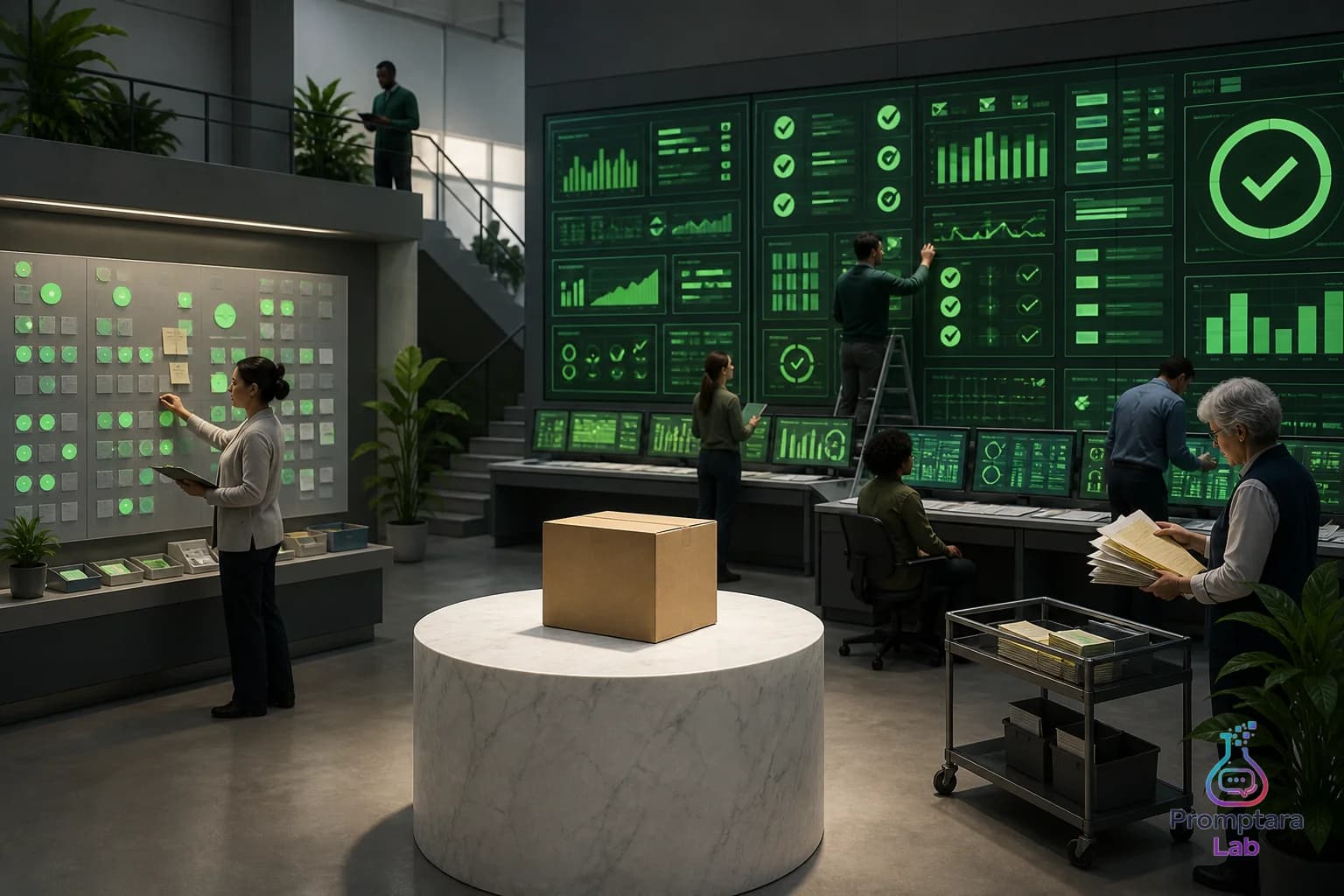
The best status model gives the operator a clean sentence: the system ran, this changed, this did not change, this costs something, and this needs attention.
Anything less is not simplicity. It is ambiguity with a nice shirt on.