Distribution Is Translation, Not Copy Paste
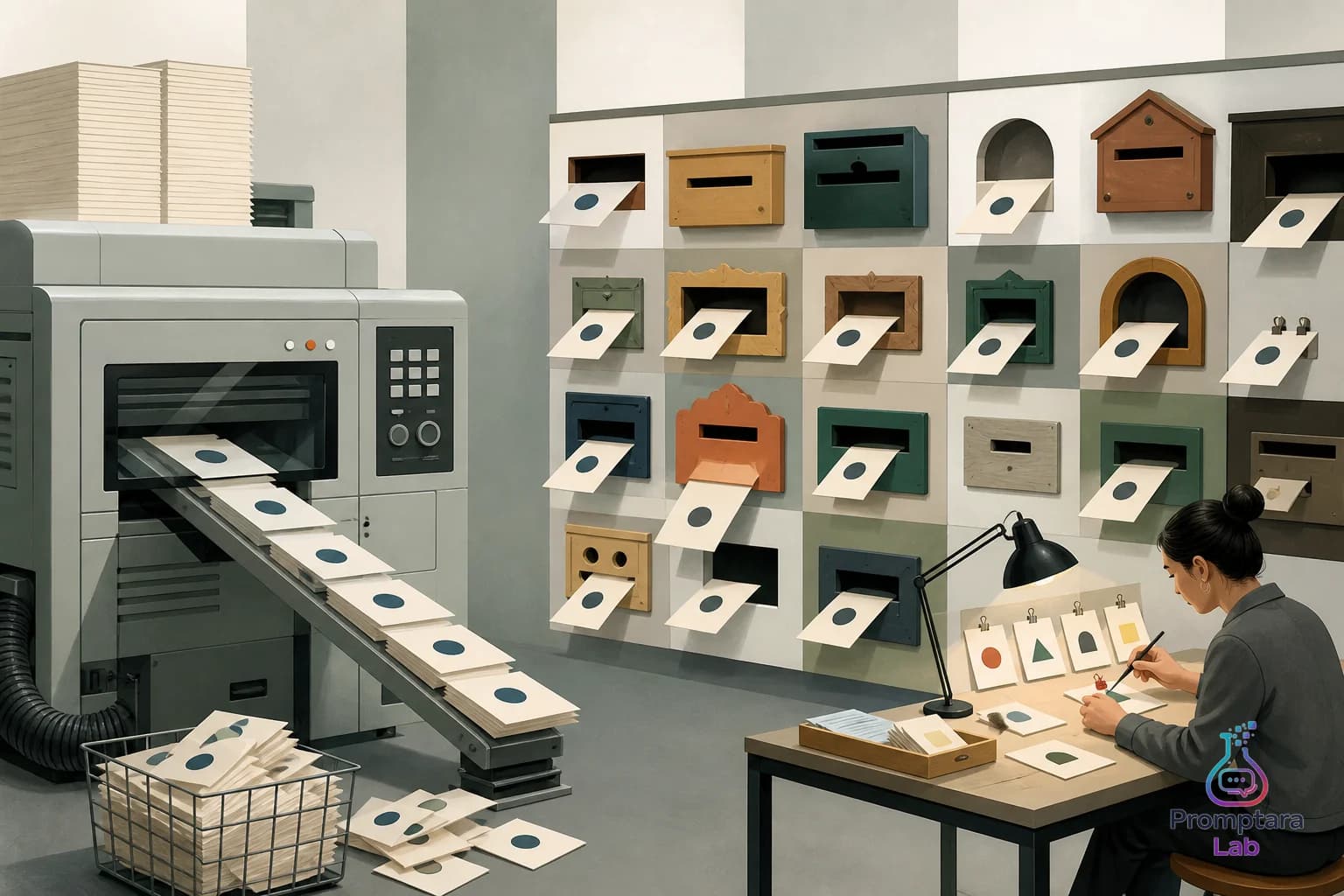
Copy paste distribution is the karaoke version of product marketing. The tune is recognizable. The confidence is high. The room is not improved.
A small product system can now take one article, one idea, or one product note and prepare it for several channels before a person has finished coffee. That is useful. It is also where a lot of lazy automation hides. The machine can make the same sentence fit into different boxes. That does not mean it understood the boxes.
At Promptara Lab, the agentic framework under the hood keeps forcing a boring rule back onto the table: distribution is translation, not copy paste. A source idea can be reused. The promise cannot be pasted blindly.
The channel is part of the product surface
People talk about distribution like it happens after the product work. That is convenient and mostly wrong.
A landing page, a blog post, a social caption, a search result, a follow prompt, a contact form, and a link in bio are all product surfaces. They set expectations. They decide what the reader thinks is available, what action seems reasonable, and how much trust the system deserves.
That means a distribution record is not just a marketing artifact. It is an interface contract.
An X post can carry a direct link and tolerate a sharper line. An Instagram caption may need to acknowledge that the link is elsewhere. A Pinterest caption often works better as a useful saved idea than as a tiny press release. Same source article, different promise.
When the system pretends those surfaces are equivalent, it creates little mismatches. Not dramatic ones. Worse. Boring ones. A caption says click, but the surface does not make clicking natural. A post compresses nuance until the useful condition disappears. A visual channel gets a sentence written for a link feed. Nobody files a bug report. The numbers just get quieter.
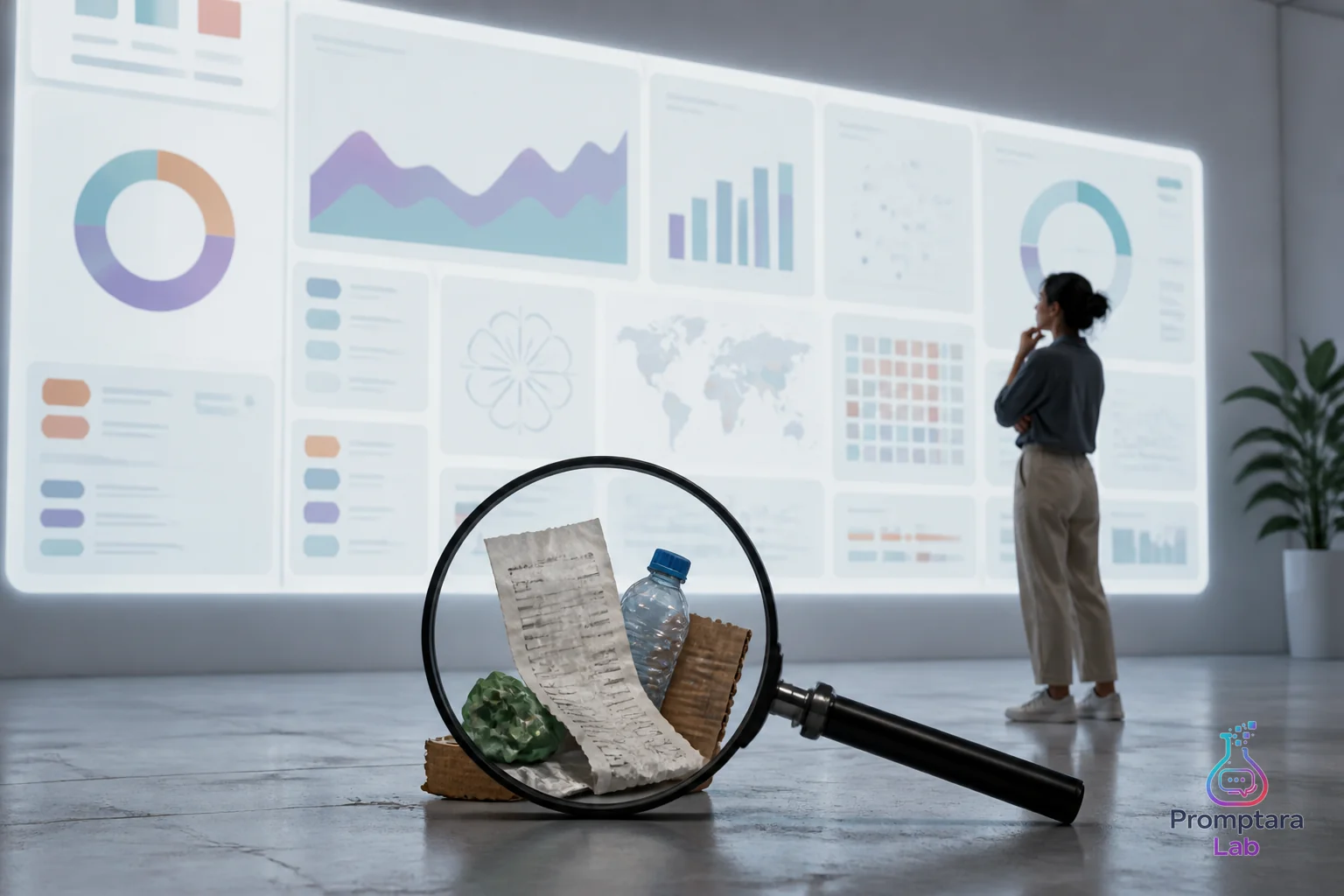
Traffic intelligence recently showed plenty of traffic without same day actions across the portfolio, and one recorded action from BrewMatch against 42 visitors. That is not a grand verdict. It is a reminder that the gap between arrival and action is already wide enough without distribution adding avoidable confusion.
One source can become several valid objects
The lazy version of reuse says: write once, paste everywhere.
The better version says: keep the source idea stable, then package it honestly for each destination.
A product system should know the difference between these two jobs:
- preserve the claim
- adapt the expression
If the source idea is about a budget coffee grinder, the claim may be about control mattering more than shiny specifications. On one channel, that can be a direct, almost grumpy sentence with a link. On another, it can become a small setup problem and a link in bio note. On a save oriented surface, it can read like a reminder someone might come back to later.
That is not decoration. That is translation.
The same applies outside content. A product alert, onboarding message, pricing note, status label, or feature explanation should not be sprayed across every surface unchanged. A dashboard tile, an email, and a customer facing page carry different levels of context. The words need to respect that.
Promptara Lab has written before that a draft needs a bill of materials. Distribution packaging is part of that bill. The draft is not only the text. It is the destination, the media state, the link behavior, the platform expectation, and the review burden.
Inspect the package, not just the sentence
A polished caption can still be a bad distribution object.
This is where AI assisted systems get sneaky. The generated words may be grammatical, on brand, and vaguely useful. Fine. But the package can still be wrong. Wrong destination. Wrong surface convention. Wrong media assumption. Wrong call to action. Wrong amount of specificity. Wrong expectation about whether the reader can act now.
An inspectable distribution record should answer plain questions:
- What source idea did this come from?
- Which surface is it meant for?
- What action, if any, does the caption imply?
- Does the destination support that action?
- Is the media present, missing, or irrelevant?
- Is this a draft, a scheduled object, a published object, or something parked for review?
That list is not glamorous. Good. Glamour is how teams end up admiring a content machine that mostly manufactures review debt.
The point is not to slow everything down with ceremonial QA. The point is to make the object reviewable at the level where mistakes actually happen. Reading only the sentence is like inspecting a delivery by complimenting the cardboard.
There is a related control problem here too. Promptara Lab has argued that the verb is the control surface. Distribution systems need verbs that say what happened: drafted, adapted, linked, uploaded, parked, reviewed, published. A vague success label does not tell the operator whether the channel promise is safe.
Copy paste saves time until it spends trust
The defense of copy paste distribution is always efficiency. It saves time. It reduces manual work. It keeps the machine moving.
All true, in the narrowest possible sense.
It also spends trust in tiny amounts. A reader notices when a channel is treated like a dumping ground. They may not describe it that way. They just do not act. They do not follow. They do not click. They do not submit. They do not come back. The system records a visit without much appetite, and everyone gets to argue with the dashboard later.
The tradeoff is not automation versus handcraft. That framing is stale. The useful tradeoff is translation cost versus mismatch cost.
Some ideas do not deserve full packaging. Park them. Some surfaces do not deserve daily feeding. Leave them quiet. Some drafts are fine with light adaptation. Others need a different hook, a different visual, or no distribution at all.
A small product portfolio does not need more places to paste. It needs fewer false promises per surface.
That is the taste line Promptara Lab keeps returning to: let automation prepare the work, but make the package legible enough that a human can reject the wrong version quickly. The machine can handle repetition. The operator should protect fit.
If you want the broader operating philosophy behind these notes, the lab keeps the public surface at Promptara Lab. It is not a shrine to automation. It is more like a shop wall with the dents left visible.
The better rule
Do not ask, “Can this be posted everywhere?”
Ask, “What does this surface make the reader believe?”
That question catches more product mistakes than another round of caption polishing. It forces the system to account for context, action, media, and promise. It makes distribution less like a clipboard and more like a translation layer.
The same idea can travel widely. It just should not wear the same shoes to every room.