
The Exception Gets a Fence
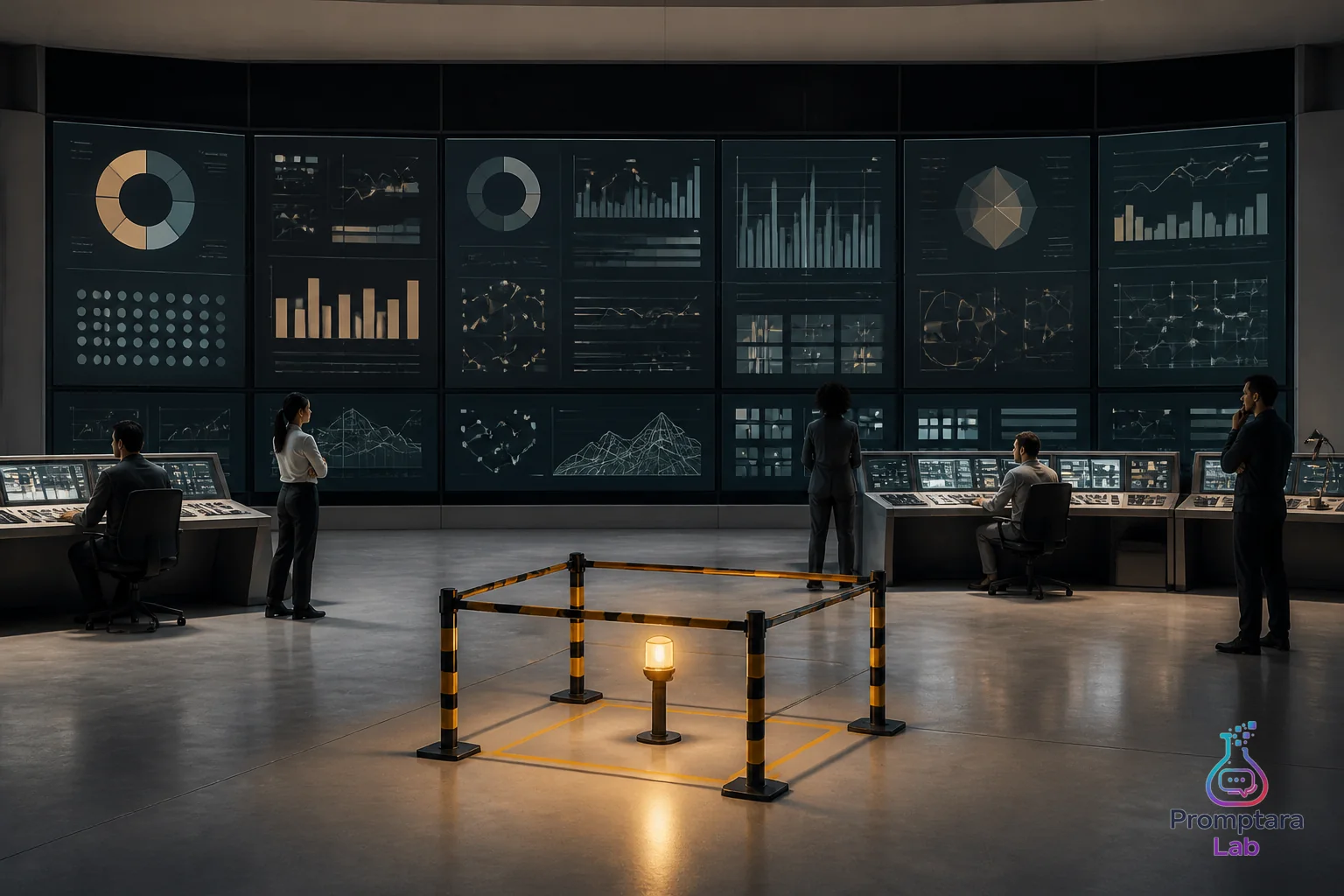
One live signal in a mostly quiet system is useful. It is also a menace.
Not because the signal is fake. It may be the cleanest thing on the board. A visitor did the thing. A matching flow got submitted. A contact form was used. A small conversion appeared while other surfaces sat there politely producing pageviews and nothing else.
The mistake is treating that exception like a board meeting.
Small product systems are especially vulnerable to this. They do not have enough volume to smooth out noise, and they usually do not have enough operator time to investigate every edge case properly. So the bright object gets too much authority. One action becomes a theory. One theory becomes a rewrite. One rewrite becomes a week of work nobody can defend without squinting.
The better move is less dramatic: give the exception a fence.
An exception is not a verdict
An exception is a scoped object. It says something happened here, under these conditions, on this surface, during this window.
That is already valuable. It is also much narrower than the story people want to tell about it.
If one product surface gets several submitted actions while a set of other surfaces gets traffic without same day actions, the first conclusion is not that the whole portfolio has found its growth pattern. The conclusion is smaller and more useful: this surface deserves a closer read.
Maybe the promise was clearer. Maybe the action was easier. Maybe the traffic source had higher intent. Maybe the form was simply closer to the visitor's question. Or maybe it was noise wearing a good jacket.
That is why Promptara Lab treats ratios as prompts, not grades. A ratio can point to a useful difference, but it cannot explain itself. The same idea sits behind Ratios Are Questions, Not Grades: arithmetic can open the inspection, but it should not close it.
A positive exception earns attention. It does not earn obedience.
The fence keeps the signal useful
A fence is not a parking lot for avoiding decisions. It is a way to preserve the exception without letting it leak into global policy.
The fence needs a few labels:
- the action verb, not just the count
- the surface where it happened
- the comparison window
- the traffic context around it
- the source shape, when available
- the next inspection question
That sounds fussy until the alternative shows up. Without labels, the exception turns into vibes. Someone remembers that the matching thing worked. Someone else remembers that a short CTA seemed better. The system starts copying surface details without knowing whether the useful part was the verb, the audience, the page, the timing, or the offer.
This is how small systems become superstitious. They copy the paint color of the door because one person walked through it.
A fenced exception keeps the observation intact. It lets the operator ask whether the signal should be watched, reproduced, compared, or ignored. It also prevents the rest of the system from inheriting a rule it did not ask for.
Promptara Lab has written before that thin signals need a holding place. The fence is the sharper version for positive exceptions. It says: yes, keep this. No, do not crown it yet.
Do not average it flat
Averages are tidy little vandals.
If one surface has action and several others have none, the average tells a mushy story. It can make the live surface look less interesting than it is, and it can make the quiet surfaces look less quiet than they are.
That helps nobody.
The operator needs surface level reading because the mechanisms are different. A product quiz, a content page, a contact form, a waitlist, and a calculator do not ask the same question of a visitor. They may all produce counts. They do not produce the same kind of evidence.
The same is true for signal systems. A system can inspect many observations, insert a smaller number, and produce a set of candidates. The source mix matters. Search suggestion data and forum language do not have the same texture. If those inputs are flattened into one confidence blob, the operator loses the reason the exception was interesting in the first place.
Counts are allowed to aggregate for monitoring. Decisions should be allowed to stay local longer.
The cost is not just being wrong
Premature generalization has a boring cost, which is why it gets underestimated.
It creates review work. It changes prompts. It nudges publication plans. It distorts product copy. It can make the next batch of drafts imitate an exception before anyone has checked whether the exception was repeatable.
None of that needs to look reckless in the moment. It looks like being responsive. It looks like listening to the data. Very professional. Very capable of wasting an afternoon.
The sharper discipline is to separate attention from authority.
Attention says: inspect this.
Authority says: change the system.
Those are different permissions. A positive exception should usually get the first one before it gets the second.
The operating rule
The rule is simple enough to be annoying: the exception gets a fence before it gets a throne.
A fenced exception can still move fast. It can trigger a local inspection. It can earn a follow up test. It can become a candidate for product or content work. It can even become a new rule later.
But it has to carry its paperwork first.
What happened? Where did it happen? What was the visitor asked to do? What else was quiet at the same time? Was the source visible? Was the action repeated? What would need to be true before this becomes a system change?
If those answers are not available, say so. Missing context is not a moral failure. Pretending it is present is how dashboards become folk medicine.
That is the kind of operating discipline Promptara Lab keeps trying to make visible: not more excitement around every signal, but better containment around the few signals that might deserve a human minute.
The exception is allowed to be interesting.
It is not allowed to redecorate the whole room by itself.