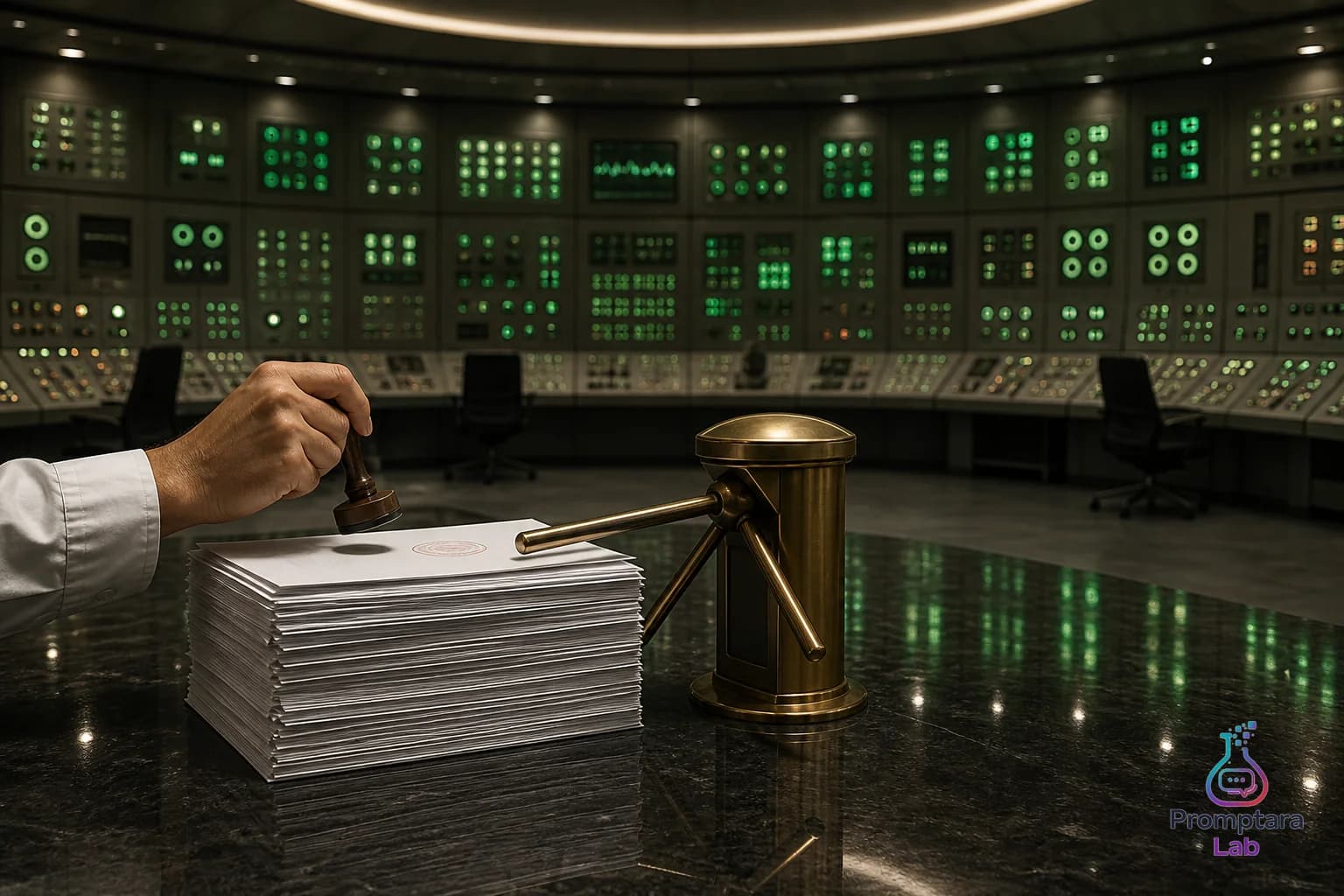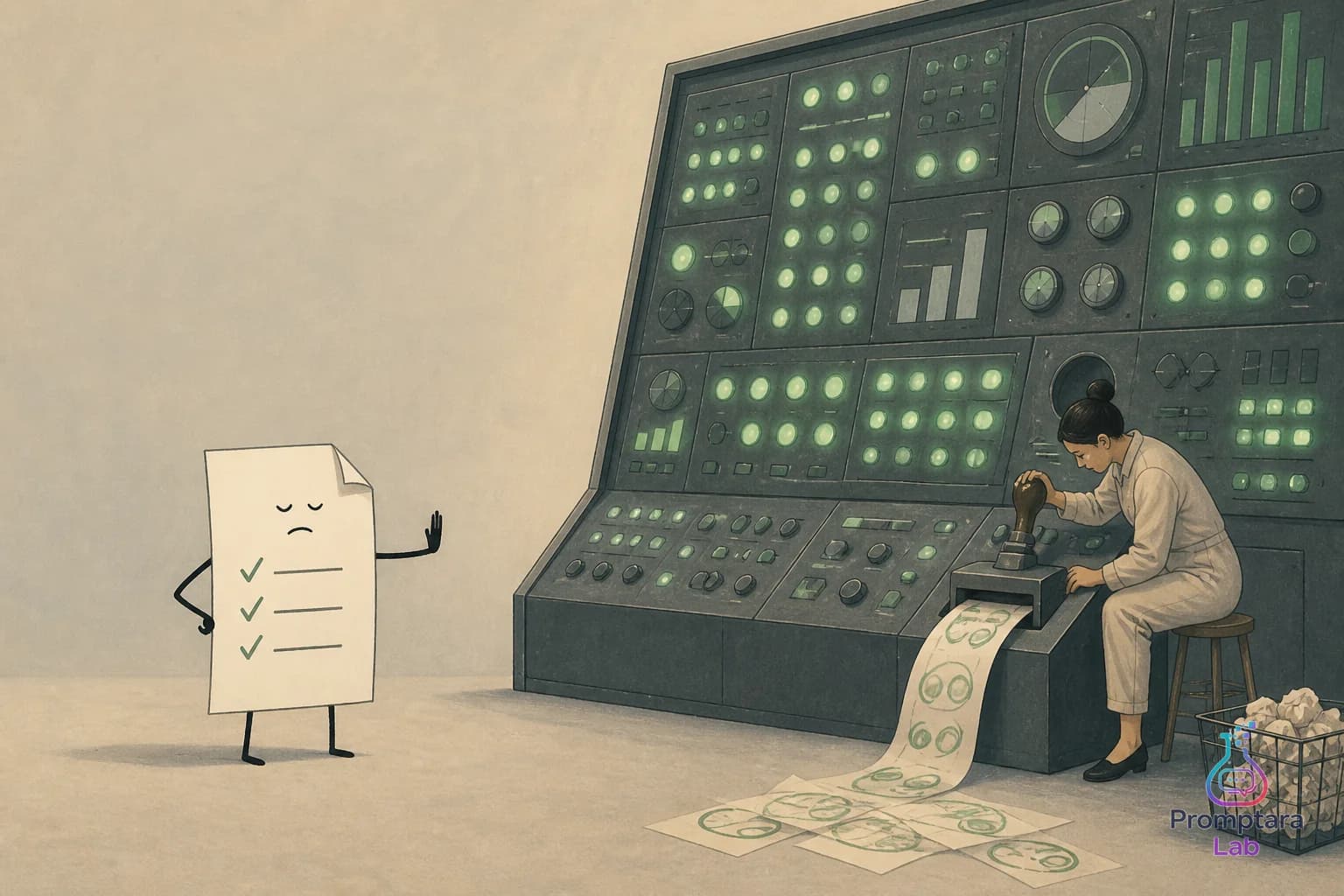
The Do-Not-Repeat List Is Product Infrastructure
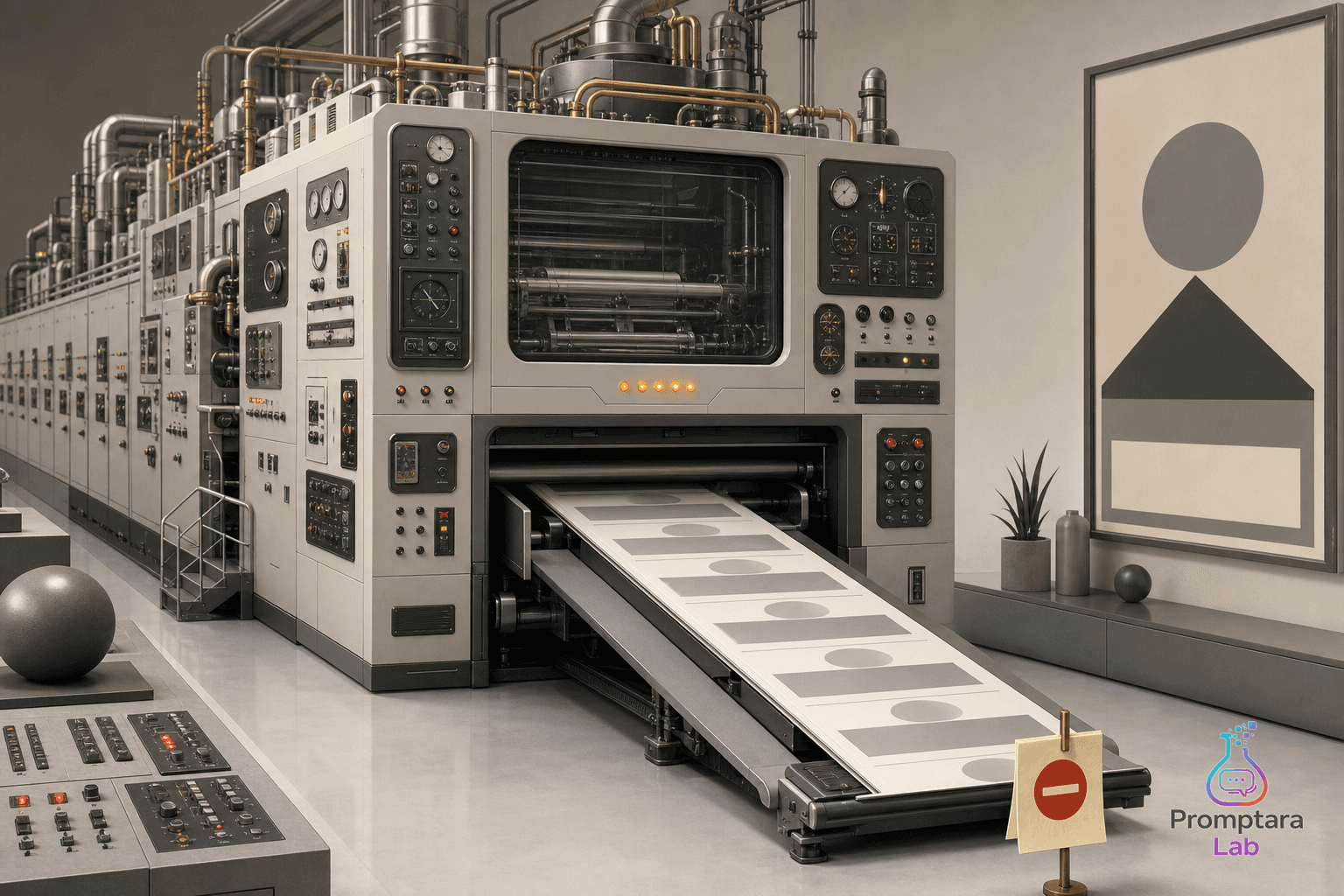
Some of the most useful editorial infrastructure looks rude.
It is a list of things the system is not allowed to write about.
Not banned topics in the legal sense. Not brand safety. Not anything dramatic. Just a plain record of ideas that have already been used recently enough that repeating them would be lazy, even if the next version wore a nicer title.
Promptara Lab runs on an agentic framework under the hood, which means the empty page is not the hard part. The harder part is preventing the machine from confidently producing the second version of yesterday’s thought with a fresh metaphor and a new slug.
That is where negative editorial memory earns its keep.
Repetition gets sneakier when the nouns change
Portfolio publishing creates a particular kind of trap.
One domain talks about espresso. Another talks about scalp care. Another talks about recycling. Another talks about security governance. On the surface, those are different worlds. The nouns change quickly, so the output can look varied even when the underlying idea is stale.
This is where teams fool themselves. They look at surface diversity and assume conceptual diversity.
A post about pageviews not being progress can become a post about traffic needing action context. A post about run receipts can become a post about auditability. A post about completion states can become a post about publishing promises. These may all be true, but truth is not enough. If the reader gets the same operational moral three days in a row, the system is repeating itself.
The portfolio did not create more insight. It created more costumes.
This is why a do-not-repeat list should sit near the front of the editorial process, not at the end as a proofreading note. It forces the system to ask a better question before it starts: what idea is currently unavailable?
Tone rules are not memory
A style guide can make bad repetition sound better.
That is useful, but dangerous. A crisp voice can hide a tired argument. Short sentences can make recycled thinking feel decisive. A good title can make yesterday’s operating note look like a new concept.
Negative memory does a different job. It does not say, “write in the right tone.” It says, “do not use that move again.”
That is a stronger constraint.
For AI-assisted publishing, this matters because the system is usually very good at adjacent phrasing. If it wrote about telemetry yesterday, it can write about dashboards today. If it wrote about content lanes yesterday, it can write about portfolio publishing today. If it wrote about domain-specific language yesterday, it can write about naming discipline today.
Those might be legitimate ideas. They might also be the same soup served in a different bowl.
The do-not-repeat list is a cheap defense against that. It turns editorial taste into an operational object. Not a vibe. Not a final human shrug. A constraint the system has to work around.
Store concepts, not just titles
The weak version of this is a title blacklist.
That helps a little, but not much. Titles are easy to mutate. Concepts are what need tracking.
A useful negative memory record should capture the actual shape of the idea. For example:
- Pageview metrics need product-action context.
- Clean automation should make skipped work visible.
- Publishing systems need separate states for sent, drafted, and completed.
- Domain language is a QA signal.
Those are not just titles. They are claims. If a new draft makes the same claim with different nouns, the system should feel friction.
This is also why editorial memory pairs well with domain vocabulary. Domain nouns help verify that a piece belongs to the product it serves. We wrote about that in Domain Nouns Are the QA Check. But nouns are not enough. A bald head, a prescription bottle, and a long espresso shot can still be used to smuggle the same generic builder lesson into three different wrappers.
The concept layer has to be tracked separately.
Negative space makes better adjacent ideas
The point is not to make publishing harder for sport.
The point is to force neighboring ideas to prove they are actually neighbors, not duplicates.
If “traffic without actions” is unavailable, the system might move toward attribution humility, intent ambiguity, or the difference between curiosity and demand. Those are adjacent, but not identical. If “run manifests” are unavailable, the system might explore editorial provenance, review burden, or why internal receipts should not become public theater.
That movement is where the useful work happens.
A good exclusion list does not shrink the idea space. It cuts off the easy exits.
This is especially important when the operating data is thin. A small portfolio may have traffic numbers, draft receipts, topic titles, and completion messages without enough evidence to make grand claims. That is fine. The correct response is not to inflate the numbers into a story. It is to choose a concept the evidence can actually support.
Sometimes the honest concept is not “look at what happened.” It is “look at the guardrail that kept this from becoming mush.”
A practical rule for AI-assisted editorial systems
Before generating a draft, the system should answer three questions:
- What idea is not allowed today?
- What adjacent idea remains available?
- What would a sharp reader notice or do differently after reading it?
If the answer to the third question is vague, the draft is probably decorative. If the answer to the second question sounds like a synonym for the first, the system is cheating. If the first question is missing entirely, the system is relying on tone to do memory’s job.
That is asking too much of tone.
Promptara Lab keeps these notes public because small product systems need more than prompts and publishing slots. They need operating memory. The useful bits are often boring: exclusion lists, concept records, evidence limits, and the occasional refusal to turn a thin signal into a confident essay. More of that work lives at Promptara Lab.
The do-not-repeat list is not glamorous. It will not impress anyone in a dashboard screenshot.
Good. That probably means it is doing actual work.